

Direct answer: The Medicare Advantage Open Enrollment Period (OEP) runs each year, early in the year, and gives you — if you’re already enrolled in a Medicare Advantage plan — one opportunity to either switch to a different Medicare Advantage plan or drop it entirely and return to Original Medicare. This is an annual window, not a one-time event — it recurs every year for as long as you remain in Medicare Advantage, though you only get one change within each year’s window. This period isn’t available to people on Original Medicare who want to join Medicare Advantage for the first time — it’s specifically for current Medicare Advantage enrollees.
What’s the Difference Between AEP and the Medicare Advantage OEP?
These are two distinct windows, and confusing them is a common mistake:
The Annual Election Period (AEP) happens each fall and is open to anyone with Medicare. During AEP, you can initially enroll in, switch, or drop a Medicare Advantage plan, switch from Original Medicare to Medicare Advantage or vice versa, and join or switch a standalone Part D plan.
The Medicare Advantage OEP, by contrast, is available only to people already enrolled in Medicare Advantage, and it allows exactly one change: switching to a different Medicare Advantage plan, or dropping Medicare Advantage entirely to return to Original Medicare. You cannot use the Medicare Advantage OEP to join Medicare Advantage for the first time if you currently have Original Medicare — that path is only available through AEP or another qualifying enrollment window.
Can I Change My Prescription Drug Plan During the Medicare Advantage OEP?
Not as a standalone action — this period is specifically about your Medicare Advantage plan, not standalone Part D coverage. However, if the Medicare Advantage plan you’re switching to includes Part D prescription drug coverage, your drug coverage changes along with the plan switch.
If you go the other direction — dropping Medicare Advantage entirely and returning to Original Medicare during this window — you can then enroll in a standalone Part D plan as part of that same transition.
What If I Miss the Medicare Advantage Open Enrollment Period?
You still have options. Special Enrollment Periods (SEPs) exist for specific qualifying life events — moving, losing other coverage, and similar circumstances — which can open another opportunity to make changes outside the standard windows. Beyond that, you’ll generally need to wait for the next AEP each fall to make further changes.
Why Does This Window Matter?
Your decision during this period can meaningfully shape your coverage, costs, and access to care for the rest of the year — it’s not a minor administrative formality. If your current Medicare Advantage plan isn’t working out — because of network changes, cost surprises, or care that no longer fits your needs — this window is a legitimate, no-underwriting opportunity to course-correct without waiting for the next AEP.
Bottom Line
The Medicare Advantage Open Enrollment Period is a recurring annual opportunity, available specifically to current Medicare Advantage enrollees, to make one change: switch plans or return to Original Medicare. It’s distinct from AEP in both timing and who it’s available to, and understanding that difference — along with knowing it comes back every year rather than being a single lifetime chance — helps you use it deliberately rather than missing it out of confusion. Reach out to an independent Medicare broker with questions about which window applies to your specific situation.
Key Takeaways
Is the Medicare Advantage Open Enrollment Period a one-time opportunity?
No — this is a common misconception. It’s an annual window that recurs every year for as long as you’re enrolled in Medicare Advantage, though you only get one plan change within each year’s window.
Who can use the Medicare Advantage Open Enrollment Period?
Only people already enrolled in a Medicare Advantage plan. It’s not available to people on Original Medicare who want to join Medicare Advantage for the first time.
What’s the difference between AEP and the Medicare Advantage OEP?
AEP is open to anyone with Medicare and allows broad changes each fall. The Medicare Advantage OEP is only for current Medicare Advantage enrollees and allows one change, early each year.
Can I switch my Part D plan during the Medicare Advantage Open Enrollment Period?
Not as a standalone change, but your drug coverage changes automatically if you switch to a different Medicare Advantage plan with Part D included, or if you return to Original Medicare and then enroll in standalone Part D.
What happens if I miss the Medicare Advantage Open Enrollment Period?
You may still qualify for a Special Enrollment Period if you experience a qualifying life event, or you can wait for the next Annual Election Period each fall.
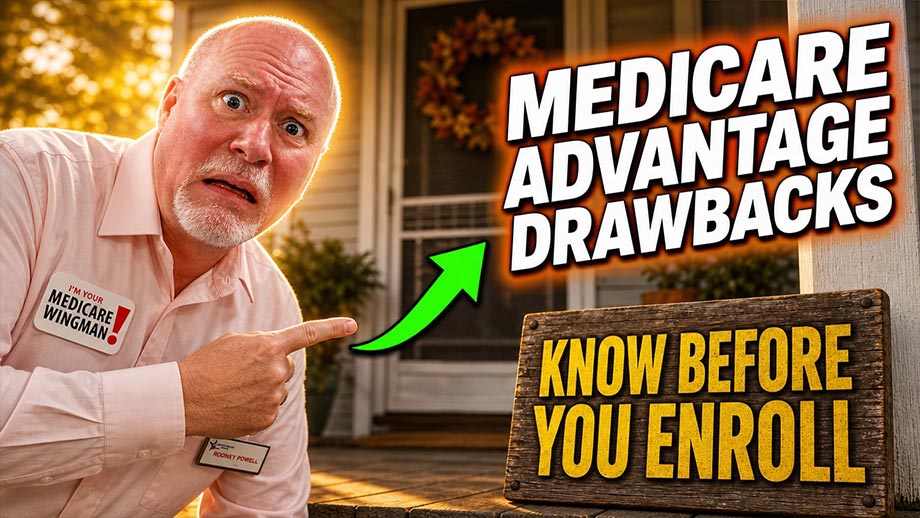
Direct answer: Medicare Advantage plans offer real benefits, but they come with genuine trade-offs: provider network restrictions, prior authorization requirements that can delay care, cost structures that look simple on the surface but often aren’t, and coverage that can change from year to year. None of these are dealbreakers for most enrollees, but understanding them before you commit — not after a claim gets denied or your doctor disappears from the network — is what actually protects you.
Network Restrictions: Why “In-Network” Matters More Than It Sounds
Medicare Advantage plans typically work with a specific list of contracted doctors and hospitals. If your preferred provider isn’t on that list, you’re facing higher costs, a denied claim, or the hassle of finding a new doctor entirely.
Always confirm your specific providers are in-network before scheduling any care, not just before enrolling — networks can and do shrink over the course of a plan year, and market-wide, several large insurers have been narrowing their networks and service areas recently, making this check more important than it used to be. Don’t rely on assumption or an old directory printout; call and confirm directly.
Authorization Requirements: The Approval Step Before Care
Many services under Medicare Advantage require prior authorization — approval from the plan before you can proceed — which can mean delays or, in some cases, outright denial of care your doctor recommends. This is one of the most frequently cited frustrations with Medicare Advantage compared to Original Medicare, where no such approval step exists.
There’s a meaningful current improvement worth knowing: federal rules are increasingly pushing insurers toward faster prior authorization decisions, clearer denial explanations, and stronger appeal rights, including independent external review. This doesn’t eliminate the requirement, but it does mean the process is becoming somewhat less opaque than it has been historically.
Cost-Structure Complexity: Why “Low Premium” Isn’t the Whole Story
Medicare Advantage plans attract enrollees with low or no monthly premiums, but that’s only one piece of your actual cost. Copays, coinsurance, and deductibles accumulate every time you actually use care, and these can add up quickly, especially with frequent visits or a serious health event. It’s the budget-airline-ticket problem: the sticker price looks great until the add-on costs show up.
Comparing total expected annual cost — premium plus deductible plus realistic copay/coinsurance estimates — rather than premium alone is the only way to get an accurate picture before you enroll.
Changes in Networks and Coverage: The Annual Reset
One of the lesser-known drawbacks: Medicare Advantage plan benefits can change from year to year, meaning a plan you liked last year isn’t guaranteed to offer the same coverage, cost-sharing, or network going forward. Providers can also be dropped from a plan’s network at any point during the year, not just at renewal — potentially leaving you without your trusted physicians mid-year with limited recourse until your next enrollment opportunity.
Reviewing your plan’s Annual Notice of Change letter carefully every year, rather than assuming automatic renewal means nothing has changed, is the practical defense against this.
Why Might Someone Want to Leave a Medicare Advantage Plan?
Common reasons include an overly burdensome referral process, difficulty coordinating care between providers, healthcare needs that have changed since you first enrolled, or a plan turning out costlier in practice than it appeared at enrollment. None of these are unusual — plans that fit well at 65 don’t always continue fitting as your health or circumstances evolve.
How Do I Switch Medicare Advantage Plans?
You have two main windows: the Annual Election Period each fall, when you can research and compare plans, or the Medicare Advantage Open Enrollment Period early in the year if you’re already enrolled and want to make one additional change. During either window, compare costs, benefits, and networks directly before applying to a new plan — treat it the same way you’d approach any other significant annual decision, not a formality.
Bottom Line
Medicare Advantage’s drawbacks — network restrictions, prior authorization, cost complexity, and year-to-year coverage changes — don’t make it a bad choice, but they do make it a plan type that requires ongoing attention rather than a one-time decision you can set and forget. Reviewing your specific plan’s network and terms every year, understanding your total cost beyond the premium, and knowing your switching windows are what actually protect you from an unwelcome surprise. Reach out to an independent Medicare broker if questions come up about your Medicare Advantage plan — we’re here to help you make informed decisions about your Medicare coverage.
Key Takeaways
What are the main drawbacks of Medicare Advantage plans?
Network restrictions, prior authorization requirements, cost-sharing that adds up beyond the premium, and coverage that can change annually.
Can my doctor be dropped from my Medicare Advantage network during the year?
Yes. Providers can be removed from a plan’s network at any point, not just at renewal, which is why regularly confirming in-network status matters.
Does prior authorization delay my care?
It can. Federal rules are pushing insurers toward faster decisions and clearer denial explanations, but the requirement itself still exists and can mean delays for certain services.
Is a zero-premium Medicare Advantage plan actually low-cost overall?
Not necessarily. Copays, coinsurance, and deductibles apply whenever you use care, so total annual cost depends on more than just the premium.
When can I switch Medicare Advantage plans?
During the Annual Election Period each fall, or during the Medicare Advantage Open Enrollment Period early in the year if you’re already enrolled.
Why might someone leave their Medicare Advantage plan?
Common reasons include a burdensome referral process, difficulty coordinating care across providers, changing health needs, or costs turning out higher than expected.

Direct answer: Beyond the well-known Medicare Advantage benefits — bundled Part A/B/D coverage, an annual out-of-pocket cap, and extras like dental and vision — many plans also offer care coordination for members managing chronic conditions. This typically means a designated care coordinator who helps track appointments, communicate between your various providers, and make sure your care plan stays consistent rather than fragmented across specialists who may not otherwise be talking to each other.
Who Actually Benefits From Care Coordination?
This feature matters most if you’re managing one or more chronic conditions — diabetes, heart disease, COPD, and similar ongoing conditions that involve multiple providers and regular monitoring. A care coordinator’s role is to be the connective tissue between those providers: making sure your cardiologist knows what your primary care doctor changed, flagging when you’re overdue for a needed screening, and generally reducing the risk of something falling through the cracks when your care involves several different specialists.
For someone with straightforward, infrequent healthcare needs, this benefit provides less practical value. For someone managing a complex, ongoing condition, it can meaningfully reduce the administrative burden of coordinating your own care.
How Do I Know If a Specific Plan Offers This?
Not all Medicare Advantage plans include care coordination, and among those that do, the actual scope varies — some offer a dedicated named contact, others a more general case management service activated only under specific conditions. If this benefit matters to you, ask directly during plan comparison rather than assuming it’s included just because a plan advertises being good for chronic conditions generally.
Bottom Line
Care coordination is a genuinely valuable but often under-explained Medicare Advantage benefit, particularly for anyone managing a chronic condition across multiple providers. If you’re comparing plans and this matters to your situation, ask specifically how a plan structures this support — a dedicated coordinator, general case management, or nothing beyond standard customer service — since the difference has real practical impact on your day-to-day care experience.
Key Takeaways
What is Medicare Advantage care coordination?
A benefit, offered by some plans, providing a designated coordinator to help manage communication between your various healthcare providers, particularly for chronic conditions.
Do all Medicare Advantage plans offer care coordination?
No. It varies by plan, and the actual structure — a dedicated contact versus general case management — differs even among plans that offer some version of it.
Who benefits most from care coordination?
People managing chronic conditions involving multiple providers, where consistent communication between specialists has real practical value.

Direct answer: Choosing between Medicare Advantage plans comes down to four things: comparing actual costs (not just the premium), confirming your medications are covered, checking your provider network, and understanding what a plan’s star rating actually reflects. For a full breakdown of the different plan types — HMO, PPO, SNP, HMO-POS — see our Medicare Advantage Plans 101 guide. This piece focuses specifically on how to actually compare plans once you know which type you’re considering.
What Should I Compare When Evaluating Medicare Advantage Plans?
Total cost, not just premium. Check premiums, deductibles, and copayments together — these are the fundamentals of what you’ll actually pay, and a low premium alone doesn’t tell you the full picture if deductibles or copays are higher elsewhere.
Drug coverage. Confirm your specific medications are on the plan’s formulary before enrolling. A plan can look great on paper and still leave you paying full price for a drug it doesn’t cover well.
Bonus benefits. Extras like dental, vision, or wellness programs vary significantly between plans — some genuinely add value, others are more limited than they sound in a plan’s marketing.
Provider networks and referral rules. Confirm your preferred doctor is actually in-network, and understand the plan’s rules for seeing a specialist — whether that requires a referral, prior authorization, or neither, depends on the specific plan type.
What Do Medicare Advantage Star Ratings Actually Mean?
Medicare Advantage plans are rated on a scale of one to five stars, reflecting performance across measures like preventive services, chronic condition management, member satisfaction, and customer service. A higher rating is generally a positive signal.
One important nuance worth knowing before you rely heavily on star ratings: CMS has tightened its scoring methodology in recent years, making top ratings genuinely harder to achieve than they used to be. This means a plan rated slightly lower today isn’t necessarily providing worse care than a similarly rated plan a few years ago — it may simply reflect a tougher benchmark, not a decline in actual quality. Star ratings are still a useful data point, but treat a rating change year-over-year with some caution rather than assuming it always reflects a real shift in how well a plan performs.
Star ratings also matter for reasons beyond quality signaling: plans rated four stars or higher receive additional federal funding, which they can — though aren’t required to — reinvest into lower premiums or richer supplemental benefits. This is part of why plans compete aggressively for that four-star threshold, and it’s also part of why comparing actual benefits between two similarly-rated plans still matters — the rating alone doesn’t guarantee what a specific plan does with that advantage.
What’s the Practical Takeaway When Comparing Plans?
Use star ratings as one input, not the deciding factor. A five-star plan that doesn’t cover your medications well or excludes your preferred doctor isn’t actually the better choice for you, regardless of its rating. Work through the cost, drug coverage, and network comparisons first, and use star ratings as a tiebreaker or a general quality signal among plans that already meet your specific needs.
Bottom Line
Comparing Medicare Advantage plans well means looking past the premium and the star rating in isolation — checking total cost, confirming your specific medications and doctors are covered, and understanding that star ratings reflect a moving, increasingly strict benchmark rather than a fixed measure of quality. Reach out to an independent Medicare broker if you want help working through this comparison for your specific situation — we’re here to help you make informed decisions about your Medicare coverage.
Key Takeaways
How do I compare Medicare Advantage plans?
Check total cost (premium, deductible, copays together), confirm your medications are on the formulary, verify your doctors are in-network, and consider the plan’s star rating as one factor among several.
What do Medicare Advantage star ratings mean?
A one-to-five scale reflecting plan performance on preventive care, chronic condition management, member satisfaction, and customer service — generally a useful, though imperfect, quality signal.
Has quality declined if a plan’s star rating drops?
Not necessarily. CMS has made star ratings harder to achieve in recent years through stricter scoring, so a lower rating can reflect a tougher benchmark rather than worse actual care.
Why do star ratings matter beyond just quality?
Plans rated four stars or higher receive additional federal funding, which can be reinvested into lower premiums or richer benefits — though plans aren’t required to pass those savings along.
Should I choose the highest-rated plan available?
Not automatically. A high-rated plan that doesn’t cover your medications or exclude your preferred doctor isn’t the better choice for you specifically — compare cost and coverage first, and use the rating as a tiebreaker.

Direct answer: Medicare Advantage (Part C) is a private-insurer alternative to Original Medicare, covering everything Part A and Part B cover, usually bundling in prescription drug coverage plus extras like dental, vision, and hearing. For a full comparison of costs, benefits, and current market trends, see our complete guide to Medicare Advantage plans. This piece focuses on something that trips people up just as often: the different types of Medicare Advantage plans, since “Medicare Advantage” isn’t one uniform product — HMO, PPO, SNP, and HMO-POS plans all work differently.
Original Medicare vs. Medicare Advantage
Provider Network
Prescription Drug Coverage
Out-of-Pocket Costs
Referrals
The core trade-off: Original Medicare gives you nationwide flexibility with no spending cap, while Medicare Advantage trades some of that flexibility for bundled benefits and a required annual cost ceiling.
This is where a lot of the real decision-making happens, and it’s the part general overviews often skip past. The main types:
HMO (Health Maintenance Organization). Requires you to use in-network providers and generally requires a referral from a primary care physician to see a specialist. Typically the lowest-cost structure, in exchange for the least flexibility.
PPO (Preferred Provider Organization). Lets you see out-of-network providers at a higher cost, and generally doesn’t require referrals to see specialists. More flexible than an HMO, usually at a higher premium or cost-sharing level.
Special Needs Plans (SNPs). Designed for specific populations with particular needs — commonly people with certain chronic conditions, those dually eligible for Medicare and Medicaid, or people in institutional care settings like a nursing home. SNPs tailor their provider networks, formularies, and care coordination specifically around the population they serve, which can mean genuinely better-suited coverage if you qualify for one, but they’re not available to everyone — eligibility is condition- or situation-specific.
HMO-POS (HMO with Point-of-Service option). Functions like a standard HMO for most care, but includes a limited allowance to see out-of-network providers for certain services, usually at a higher cost. A middle ground between the strict HMO structure and full PPO flexibility.
Choosing between these isn’t just about premium — it’s about matching the structure to how you actually use healthcare. If you have a chronic condition, checking whether an SNP designed for that condition is available in your area is worth doing before defaulting to a standard HMO or PPO.
Pros:
Cons:
When Can I Enroll in a Medicare Advantage Plan?
Not anytime — enrollment is tied to specific windows: when you first become eligible for Medicare, and during the Annual Election Period each fall, which is your main opportunity to enroll, switch, or leave a Medicare Advantage plan for the following year. Missing these windows generally means waiting for the next available enrollment opportunity, barring a qualifying life event that opens a Special Enrollment Period.
Yes — having a Medicare Advantage plan means you can’t simultaneously use a Medigap policy. The two are mutually exclusive by design, since Medigap is built to supplement Original Medicare specifically, not a Medicare Advantage plan. You choose one structure or the other.
Bottom Line
Medicare Advantage isn’t a single product — it’s a category with genuinely different plan types (HMO, PPO, SNP, HMO-POS) that work differently in terms of network flexibility, referral requirements, and who they’re designed for. Comparing plan types against how you actually use healthcare, not just comparing premiums, is what actually determines whether Medicare Advantage — and which specific type — fits your situation. Reach out to an independent Medicare broker for help matching a specific plan type to your needs at no cost to you.
Key Takeaways
What are the different types of Medicare Advantage plans?
HMO, PPO, Special Needs Plans (SNPs), and HMO-POS plans, each with different network rules, referral requirements, and target populations.
What’s the difference between an HMO and PPO Medicare Advantage plan?
HMOs require in-network care and typically referrals to specialists, usually at lower cost. PPOs allow out-of-network care and typically don’t require referrals, usually at higher cost.
What is a Special Needs Plan (SNP)?
A Medicare Advantage plan type designed for specific populations, such as people with certain chronic conditions or those dually eligible for Medicare and Medicaid — not available to everyone.
Can I switch from Original Medicare to Medicare Advantage anytime?
No. Enrollment is limited to specific windows — when you first become eligible, during the Annual Election Period each fall, or during a qualifying Special Enrollment Period.
Does Medicare Advantage affect my ability to have Medigap?
Yes. You can’t have both simultaneously — Medicare Advantage and Medigap are mutually exclusive coverage structures.
Do all Medicare Advantage plans include prescription drug coverage?
Most do, but not universally — always confirm Part D coverage is included in the specific plan you’re considering.

Direct answer: No. “Zero-dollar premium” refers only to the plan’s monthly premium — it doesn’t mean the plan is free to use. You still pay your standard Part B premium, and you’re still responsible for deductibles, copays, and coinsurance when you actually receive care. The “zero” is genuinely accurate as far as it goes, but it describes one piece of your total cost, not the whole picture.
Who’s Actually Paying for These Plans?
When you enroll in a Medicare Advantage plan, you’re shifting responsibility for your medical care from the federal government directly to a private insurance company. Those insurers aren’t offering coverage out of goodwill — they’re paid by Medicare for every person who enrolls.
Specifically, CMS pays Medicare Advantage insurers a fixed monthly amount per enrollee, called a capitated payment, rather than reimbursing for each service the way Original Medicare does. That per-person payment is adjusted up or down based on each enrollee’s expected health care costs — insurers receive more for enrollees expected to need more care, and less for those expected to need less. This is the actual mechanism behind “free” premiums: the insurer’s revenue comes from Medicare’s per-enrollee payment, not from your monthly premium, so a zero-dollar premium doesn’t mean the insurer is losing money on you — it means your premium simply isn’t where their revenue comes from.
Despite the “zero premium” headline, real costs exist beneath the surface:
None of this means Medicare Advantage plans are a bad deal — many genuinely are a strong fit for a lot of people. But “zero premium” describes only one line item in your total annual cost, and treating it as the whole picture is how people end up surprised by what they actually spend.
How Does Medicare Advantage Compare to Medigap on Cost?
This is really a comparison between two different cost structures, not a simple cheaper-versus-more-expensive question. Medicare Advantage plans typically offer lower — sometimes zero — monthly premiums, but in exchange, you navigate provider networks and face higher cost-sharing when you actually use care. Medigap, on the other hand, requires a separate standalone Part D plan and comes with a meaningfully higher premium upfront, but it covers most of what Original Medicare leaves you responsible for, without network restrictions or the same referral hassles.
Think of it like the difference between a budget airline ticket and a first-class fare. Medicare Advantage has the lower sticker price, but the “baggage fees” show up as network restrictions and cost-sharing when you actually need care. Medigap plans, while pricier upfront, don’t nickel-and-dime you at the point of care — you’re paying more consistently in exchange for a smoother, more predictable experience when you need it.
So Which One Should I Choose?
That depends entirely on your personal situation, and there’s no universally correct answer. Medicare Advantage plans genuinely are rich in benefits for many people, and they work very well for a large share of enrollees — most people choose them, in fact. But “most people” isn’t the same as “you specifically.” Whether the trade-off of lower premiums for network restrictions and variable cost-sharing makes sense depends on your health needs, how often you expect to need care, and how much predictability matters to you.
Bottom Line
“Zero-dollar premium” is accurate marketing, not false advertising — but it’s also incomplete on its own. The real cost of a Medicare Advantage plan includes your ongoing Part B premium, plan-specific deductibles, and cost-sharing that accumulates whenever you actually use care. Understanding this trade-off, and comparing it honestly against Medigap‘s higher-premium, lower-surprise structure, puts you in control of a decision that should be based on your specific situation, not just the headline number. An independent Medicare broker can walk through your full expected costs under both paths at no cost to you.
Key Takeaways
Is a zero-premium Medicare Advantage plan really free?
No. You still pay your Part B premium plus deductibles, copays, and coinsurance for actual care — “zero premium” only refers to the plan’s own monthly charge.
How do insurers make money on zero-premium plans?
CMS pays Medicare Advantage insurers a fixed monthly amount per enrollee, adjusted for each enrollee’s expected health care costs — this payment, not your premium, is the insurer’s primary revenue source.
What hidden costs come with Medicare Advantage plans?
Your ongoing Part B premium, plan-specific deductibles, and copays or coinsurance for doctor visits, procedures, and prescriptions, which accumulate especially if you need frequent care.
Is Medicare Advantage cheaper than Medigap overall?
It depends on how much care you actually use. Medicare Advantage has lower upfront costs but variable cost-sharing; Medigap has higher upfront costs but minimal cost-sharing when you need care.
Why do so many people choose Medicare Advantage despite the trade-offs?
The lower or zero premium and bundled extra benefits appeal to many people, and for those with lighter healthcare needs or comfort with network restrictions, it often works out well financially.
Should I choose Medicare Advantage or Medigap?
There’s no universal answer — it depends on your health needs, how often you expect to need care, your tolerance for network restrictions, and how much you value predictable versus lower upfront costs.

Direct answer: Medigap supplements Original Medicare, letting you see any provider nationwide who accepts Medicare, in exchange for a higher monthly premium and minimal unpredictable costs. Medicare Advantage replaces Original Medicare with a private plan that typically bundles drug coverage and adds extras, often at a lower starting premium, in exchange for a provider network and potential prior authorization requirements. Neither is objectively better — the right choice depends on how you’d rather structure your healthcare spending: predictable monthly costs with maximum flexibility, or lower upfront costs with network restrictions and variable out-of-pocket exposure.
With a Medigap Supplement, you keep Original Medicare Parts A and B as your primary coverage. Because Medigap has no provider network, you can see any Medicare-accepting provider nationwide, with no referrals required. You’ll pair this with a standalone Part D plan for prescription coverage, and a Medigap Supplement to cover the deductibles and coinsurance Original Medicare leaves behind.
The trade-off for this flexibility is cost structure: you pay a higher monthly premium in exchange for covering nearly all your potential out-of-pocket exposure, which is exactly why Medigap plans like Plan G are often described as the most comprehensive option available — genuine peace of mind against a large, unexpected medical bill.
A Medicare Advantage plan (Part C) is a private alternative to Original Medicare. These plans must cover everything Original Medicare covers and usually bundle in Part D prescription drug coverage plus extras like dental and vision. In exchange for often-lower starting premiums — many plans are available with no separate premium beyond your standard Part B premium — you generally use a specific provider network, and non-emergency care outside that network may cost significantly more or not be covered at all.
Worth understanding clearly: Medicare Advantage networks vary substantially in size. On average, Medicare Advantage enrollees have access to roughly half the physicians available to someone on Original Medicare in the same area, though this varies enormously by plan and location — some networks are much broader, others much narrower. This is exactly why confirming your specific doctors are in-network matters more with Medicare Advantage than with Medigap, where that question simply doesn’t apply.
Three questions help narrow the decision:
Medigap Supplements mean paying a consistent monthly premium in exchange for largely eliminating the risk of a large, unexpected healthcare bill. Medicare Advantage plans often let you avoid or minimize that premium, but you’ll face copays and cost-sharing up to the plan’s annual out-of-pocket maximum — a real cap, but one that can still mean a meaningful bill in a serious health year, unlike Medigap’s near-complete predictability.
It really is a choice between a guaranteed, steady monthly expense and a potentially larger, though capped, expense that only materializes if you need significant care. Neither approach is wrong — it’s genuinely about which trade-off fits your financial comfort and healthcare situation, not just the math.
Bottom Line
Medigap and Medicare Advantage solve fundamentally different problems: one buys you predictability and nationwide flexibility at a steady cost, the other offers a lower starting cost and bundled extras in exchange for network restrictions and variable exposure. Neither is the objectively “right” answer — the right choice depends on your health needs, your travel habits, your tolerance for network restrictions, and how you’d rather structure your healthcare spending. An independent Medicare broker can walk through both paths against your specific situation at no cost to you.
Key Takeaways
What’s the main difference between Medigap and Medicare Advantage?
Medigap supplements Original Medicare with no network restrictions at a higher premium; Medicare Advantage replaces Original Medicare with a private, network-based plan often at a lower starting premium.
Can I see any doctor with Medigap?
Yes, any provider nationwide who accepts Original Medicare, with no referrals required.
Does Medicare Advantage restrict which doctors I can see?
Generally yes. Medicare Advantage plans use provider networks, and enrollees have access to roughly half the physicians available under Original Medicare on average, though this varies by plan.
Which is cheaper, Medigap or Medicare Advantage?
It depends on how you measure cost. Medicare Advantage often has a lower or no monthly premium, but Medigap minimizes unpredictable out-of-pocket costs. Total annual cost depends on your specific healthcare use.
Does Medicare Advantage require prior authorization?
Often, yes, for certain services — though federal rules are pushing insurers toward faster, clearer prior authorization decisions. Medigap doesn’t involve prior authorization at all.
Can I switch from Medicare Advantage to Medigap later if I change my mind?
Sometimes, but not always guaranteed. Outside specific protected windows, switching to Medigap later can require medical underwriting, so this is worth weighing carefully at the time of your original decision.
Is one plan type objectively better than the other?
No. The right choice depends on your health needs, travel habits, tolerance for network restrictions, and financial comfort with predictable versus variable costs.

Direct answer: Medicare is federal health insurance primarily for people age 65 and older, plus certain younger people with qualifying disabilities or specific medical conditions. It’s built from four parts: Part A (hospital insurance), Part B (medical insurance), Part C (Medicare Advantage, a private-plan alternative), and Part D (prescription drug coverage). It isn’t free — most people pay no premium for Part A, but Part B carries a monthly premium along with deductibles and coinsurance. Getting your enrollment timing right matters, since missing your window can mean a permanent penalty added to your premium for as long as you’re on Medicare.
Parts A and B together are called Original Medicare. With Original Medicare, you can see any provider nationwide who accepts Medicare — no network restrictions. Medicare Advantage trades that nationwide flexibility for a private network and typically added benefits.
Original Medicare (Parts A and B) doesn’t include routine dental, vision, or hearing care, and doesn’t include prescription drug coverage unless you separately enroll in Part D. Just as importantly, Original Medicare has no annual out-of-pocket maximum — unlike Medicare Advantage plans, which are required to cap your yearly spending. This is one of the most consequential gaps in Original Medicare, and it’s the main reason many beneficiaries pair it with a Medigap supplement policy or choose Medicare Advantage instead.
If you’re already receiving Social Security benefits, enrollment in Parts A and B typically happens automatically, with your Medicare card arriving in the mail before your coverage begins.
If you’re not automatically enrolled, you need to sign up during your Initial Enrollment Period — a seven-month window:
Missing this window without a qualifying reason to delay can trigger a permanent late enrollment penalty added to your premium.
This depends on your employer’s size, and it’s a detail worth getting right:
This distinction catches a lot of people off guard. Don’t assume you can delay Part B just because you have employer coverage — confirm your employer’s size and how their plan coordinates with Medicare before making that call, ideally by talking with your company’s benefits administrator.
Bottom Line
Medicare is the federal health insurance foundation for retirement healthcare, built from four distinct parts that cover different needs — hospital care, outpatient care, private-plan alternatives, and prescriptions. The details that trip people up most: Original Medicare has no out-of-pocket cap, working past 65 doesn’t always mean you can delay Part B safely, and enrollment timing carries permanent financial consequences if missed. Start with your enrollment window, confirm your specific work situation if you’re still employed, and don’t hesitate to get guided help — you don’t have to sort all of this out alone. An independent Medicare broker can walk through your specific situation at no cost to you.
Key Takeaways
Is Medicare free?
No. Most people pay no premium for Part A, but Part B has a monthly premium for everyone, plus deductibles, copayments, and coinsurance for covered services.
Does Medicare cover dental and vision?
Original Medicare (Parts A and B) does not cover routine dental or vision care. Many people choose a Medicare Advantage plan specifically to get these added benefits.
Can I keep my current doctor?
With Original Medicare, yes — you can see any doctor nationwide who accepts Medicare. With Medicare Advantage, you’ll generally need to use a doctor within that plan’s network.
What if I’m still working when I turn 65?
It depends on your employer’s size. With 20 or more employees, you can typically delay Part B without penalty. With fewer than 20 employees, you usually need to enroll in Part B when first eligible.
Does Original Medicare have a cap on what I’ll pay?
No. Parts A and B combined have no annual out-of-pocket maximum, which is why many people add a Medigap policy or choose Medicare Advantage, which does include a spending cap.
What happens if I miss my Initial Enrollment Period?
You may face a permanent late enrollment penalty added to your premium, unless you qualify for a Special Enrollment Period, most commonly due to active employer coverage.
Who is eligible for Medicare?
People 65 and older who are U.S. citizens or long-term legal residents, people under 65 with a qualifying disability, and people with ESRD or ALS regardless of age.
By submitting your information, you agree that a licensed insurance agent may contact you by phone or email to answer your questions or provide additional information about Medicare Advantage or Prescription Drug Plans or Medicare Supplement Insurance plans. This is an advertisement for insurance.
Privacy Policy

We do not offer every plan available in your area. Currently we represent six organizations offering thirty products in your area. Please contact Medicare.gov, 1-800-MEDICARE, or your local State Health Insurance Program (SHIP) to get information on all of your options.
Not connected with or endorsed by the United States government or the federal Medicare program.
HEARTWISE, a Senior Health Services affiliate
Copyright © 2026 HEARTWISE, LLC | Privacy Policy