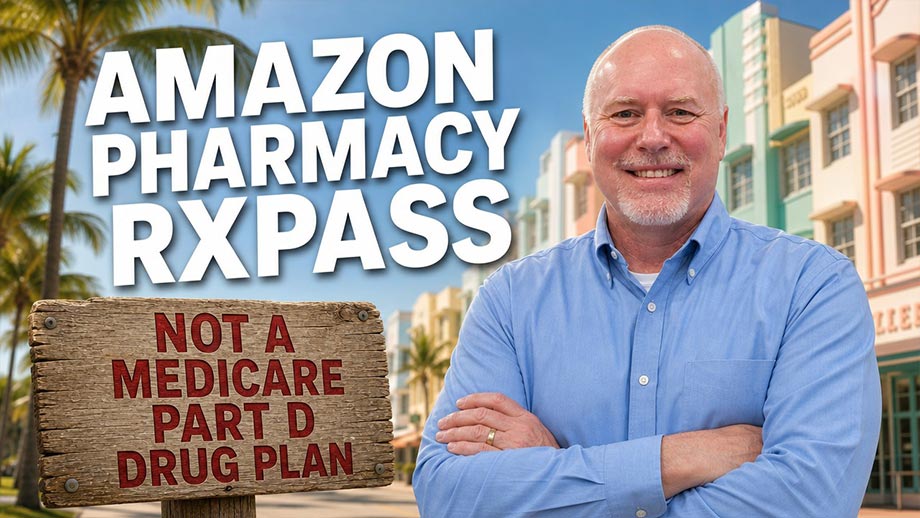
Direct answer: RxPass is a subscription savings program, exclusive to Amazon Prime members, offering unlimited fills of more than 50 specific generic medications for one low flat monthly fee — not insurance, and not a substitute for Medicare Part D. Part D is comprehensive prescription drug insurance with broader coverage, an annual out-of-pocket cap, and real financial protection against high-cost or unexpected medications. Understanding the difference matters, especially if you’re tempted to treat RxPass as a full replacement for drug coverage rather than what it actually is: a narrow, useful tool for a specific, limited set of medications.
How Does RxPass Actually Work?
For one low flat monthly fee, eligible Amazon Prime members get:
Important limitations to understand before relying on it:
Part D is optional but genuinely important prescription drug coverage, offered through private insurers approved by Medicare — either as a standalone Prescription Drug Plan alongside Original Medicare, or bundled into a Medicare Advantage plan.
The core structural differences:
Here is the table content reformatted into a clean list format:
Part D functions as real insurance — it spreads risk, includes a genuine annual out-of-pocket cap, and protects you against a sudden high-cost or unexpected medication. RxPass offers neither of those protections; it’s valuable specifically because it’s cheap and simple for a narrow, stable list of common generics, not because it protects you against anything going wrong.
Scope is narrow by design. If every medication you currently take is on the RxPass list and stays there, the flat fee can be dramatically cheaper than a Part D premium plus cost-sharing. The moment you need a brand-name drug, a specialty medication, or anything off the list, you’re paying full price out of pocket or switching to another savings option entirely.
There’s no real risk protection. Part D’s annual out-of-pocket cap is a genuine financial safety net once you hit it. RxPass has nothing comparable — a sudden health change or a new high-cost prescription leaves an RxPass-only user fully exposed, with no ceiling on what they might pay.
You’re locked into one pharmacy. Part D lets you use local network pharmacies or mail order, whichever you prefer. RxPass requires Amazon Pharmacy delivery exclusively — convenient for many, but not ideal if you value in-person counseling or same-day pickup.
Dropping Part D to rely solely on RxPass risks a permanent penalty. If you go without creditable prescription drug coverage and later decide you need broader protection, you can face a permanent late enrollment penalty added to your premium for as long as you have Part D — a real, lasting cost that can easily outweigh whatever you saved by skipping coverage in the meantime.
You generally can’t use both for the same medication. Because RxPass can’t be combined with insurance, prescriptions filled under the subscription typically don’t route through your Part D plan and generally don’t count toward your Part D deductible or out-of-pocket cap. Some people strategically use RxPass for eligible generics while keeping Part D active for everything else — but confirm this approach works as expected with both your specific plan and Amazon before relying on it.
For most seniors — especially anyone managing multiple chronic conditions, needing brand-name medications, or wanting genuine financial protection against a high-cost prescription — a well-chosen Part D plan or Medicare Advantage plan with drug coverage remains the stronger foundation. If cost is the main concern, Extra Help (the Low-Income Subsidy) can meaningfully reduce Part D costs for those who qualify, which is worth checking before assuming RxPass is your only affordable option.
Bottom Line
RxPass can be a genuinely smart, money-saving tool for the right person with the right narrow set of medications — but it’s not a substitute for Medicare Part D, and treating it like one risks real financial exposure and a permanent late enrollment penalty. The most financially sound approach for many fixed-income households is understanding both tools clearly and using each specifically where it delivers the most value: RxPass for cheap, stable generics, and Part D for genuine insurance protection against everything else.
Key Takeaways
What is Amazon RxPass?
A subscription savings program for Amazon Prime members offering unlimited fills of 50+ specific generic medications for one flat monthly fee — not insurance.
Is RxPass available in Texas?
Yes, currently — Texas was previously excluded but has since been added back to the program. Only California and Washington remain excluded as of now; always confirm current availability directly on Amazon’s site since this has changed multiple times.
Can Medicare beneficiaries use RxPass?
Yes, generally, if they’re not also dual-eligible for Medicaid — this eligibility was expanded after RxPass initially launched without Medicare access.
Does RxPass replace Medicare Part D?
No. RxPass covers only a narrow list of generics with no out-of-pocket cap or broader risk protection, while Part D is genuine insurance with an annual spending cap and much wider drug coverage.
Can I use RxPass and Part D together for the same medication?
Generally no — RxPass can’t be combined with insurance, so medications filled under the subscription typically don’t count toward your Part D deductible or cap.
What happens if I drop Part D to save money with RxPass?
You risk a permanent late enrollment penalty if you later need broader drug coverage, which can easily outweigh whatever you saved by skipping Part D in the meantime.
By submitting your information, you agree that a licensed insurance agent may contact you by phone or email to answer your questions or provide additional information about Medicare Advantage or Prescription Drug Plans or Medicare Supplement Insurance plans. This is an advertisement for insurance.
Privacy Policy

We do not offer every plan available in your area. Currently we represent six organizations offering thirty products in your area. Please contact Medicare.gov, 1-800-MEDICARE, or your local State Health Insurance Program (SHIP) to get information on all of your options.
Not connected with or endorsed by the United States government or the federal Medicare program.
HEARTWISE, a Senior Health Services affiliate
Copyright © 2026 HEARTWISE, LLC | Privacy Policy