
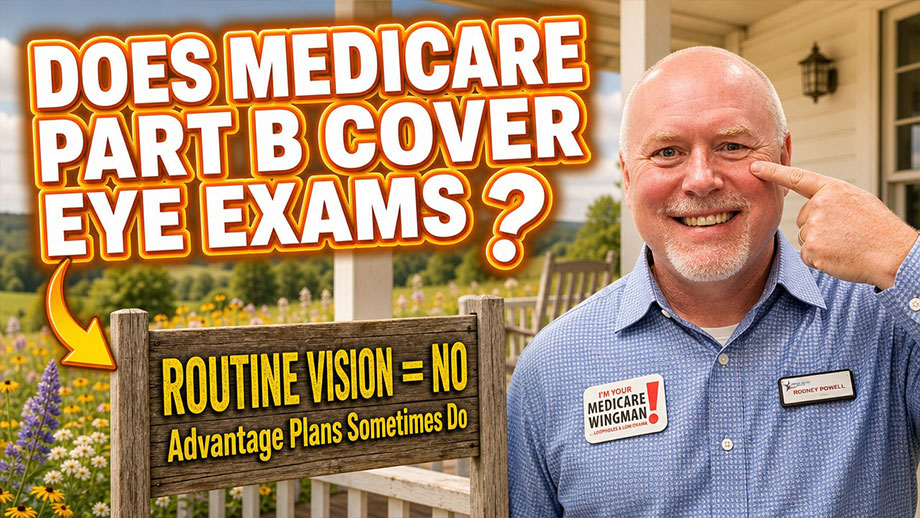
Direct answer: No, not for routine vision care. Medicare Part B does not cover eye exams for the purpose of prescribing eyeglasses or contact lenses. It does cover eye exams and treatment when tied to specific medical conditions — diabetic retinopathy, glaucoma risk, macular degeneration, and cataracts. If routine vision care matters to you, that coverage typically comes from a Medicare Advantage plan or standalone vision insurance, not from Original Medicare.
Why Doesn’t Medicare Cover Routine Eye Exams?
Original Medicare is built around medically necessary care, not preventive wellness services like corrective-lens prescriptions. Routine eye exams for glasses or contacts fall outside that definition, so Part B excludes them entirely — regardless of age or how long it’s been since your last exam. This is a permanent structural feature of the program, not a temporary gap.
Part B steps in when an eye exam is tied to diagnosing or monitoring a specific medical condition. Here’s the breakdown:
Diabetic Retinopathy: Medicare covers one dilated eye exam each year. You must have a diagnosis of diabetes to qualify.
Glaucoma: Medicare covers one glaucoma screening per year. You must meet Medicare’s high-risk criteria to be eligible.
Age-Related Macular Degeneration (AMD): Medicare covers diagnostic tests and treatment, including injectable medications. Coverage applies when AMD is diagnosed or suspected.
Cataracts: Medicare covers cataract surgery, including implantation of a standard intraocular lens (IOL). Coverage requires a medically necessary cataract diagnosis.
Eye Prostheses: Medicare covers prosthetic eyes and necessary adjustments. Coverage is available for individuals who have experienced eye loss due to a birth defect, trauma, or surgery.
You’re considered high-risk for glaucoma screening purposes if you have diabetes, a family history of glaucoma, or fall into specific age and ethnicity categories the CDC and CMS have identified as higher-risk populations — your eye doctor’s office can confirm whether you qualify.
For all of these covered services, standard Part B cost-sharing applies: you’re responsible for coinsurance after your annual Part B deductible is met.
Yes — this is the one routine-vision exception in Original Medicare. After cataract surgery that includes an intraocular lens implant, Part B covers one pair of standard eyeglasses or one set of contact lenses. Upgrades like designer frames, anti-reflective coating, or progressive lenses aren’t included; you’d pay the difference between the standard option and any upgrade.
How Do Medicare Advantage Plans Cover Vision Care?
Medicare Advantage (Part C) plans are the primary route most beneficiaries use to get routine vision coverage. The large majority of individual Medicare Advantage plans now include some vision benefit, typically:
Exact benefit amounts, network requirements, and copays vary significantly by plan and by county, so review the plan’s Evidence of Coverage document rather than relying on general marketing descriptions of “vision benefits.”
If you’re staying on Original Medicare and want routine coverage without switching to Medicare Advantage:
Private vision insurance. Standalone plans covering routine eye exams, glasses, and contacts. Cost structure depends on the insurer’s premium, deductible, and out-of-pocket design.
Vision discount plans. Not insurance — membership programs offering reduced rates on eye care through a network of participating providers, in exchange for an annual membership fee.
Keep in mind Medigap plans don’t add vision coverage; they only help cover your share of costs for services Original Medicare already covers, so a glaucoma screening’s coinsurance might be picked up by Medigap, but a routine glasses-prescription exam still wouldn’t be covered at all.
Bottom Line
Medicare Part B covers eye care tied to specific medical conditions — diabetic retinopathy, glaucoma risk, macular degeneration, cataracts — but not routine vision exams for glasses or contacts. If comprehensive vision coverage matters to you, compare Medicare Advantage plans’ vision benefits in your area, or price out standalone vision insurance. An independent Medicare broker can walk through what’s actually included in each plan’s vision benefit at no cost to you.
Key Takeaways
Does Medicare Part B pay for eye exams?
Only for specific medical conditions — diabetic retinopathy, glaucoma risk, macular degeneration. Routine exams for glasses or contacts are not covered.
Who qualifies for a Medicare-covered glaucoma screening?
People with diabetes, a family history of glaucoma, and individuals in specific higher-risk age and ethnicity categories identified by CMS. Confirm your eligibility with your eye doctor’s office.
Does Medicare cover eyeglasses?
Only after cataract surgery with an intraocular lens implant, and only for one pair of standard-frame glasses or one set of contacts. Routine eyeglasses purchases outside that scenario aren’t covered.
Does Medicare cover eye exams for diabetics?
Yes. Part B covers one dilated eye exam per year for diabetic retinopathy screening if you have a diabetes diagnosis.
Does Medicare Advantage cover routine eye exams?
Most Medicare Advantage plans do, typically including an annual routine eye exam and an eyewear allowance. Exact coverage varies by plan, so check the Evidence of Coverage document.
Does Medigap cover vision care?
No. Medigap only covers your share of cost-sharing (deductibles and coinsurance) for services Original Medicare already covers — it doesn’t add new vision benefits.
Does Medicare cover LASIK or vision correction surgery?
No. Elective refractive surgery like LASIK is considered cosmetic, not medically necessary, and is excluded from Medicare coverage entirely.

By submitting your information, you agree that a licensed insurance agent may contact you by phone or email to answer your questions or provide additional information about Medicare Advantage or Prescription Drug Plans or Medicare Supplement Insurance plans. This is an advertisement for insurance.
Privacy Policy

We do not offer every plan available in your area. Currently we represent six organizations offering thirty products in your area. Please contact Medicare.gov, 1-800-MEDICARE, or your local State Health Insurance Program (SHIP) to get information on all of your options.
Not connected with or endorsed by the United States government or the federal Medicare program.
HEARTWISE, a Senior Health Services affiliate
Copyright © 2026 HEARTWISE, LLC | Privacy Policy