

Direct answer: No — this is a genuinely common and costly assumption. Original Medicare (Parts A and B) covers drugs only in narrow, specific situations, not as general prescription coverage. Most Medicare drug coverage comes through Part D plans, and even Part D itself doesn’t cover every medication — each plan maintains its own formulary, and certain drug categories are excluded from Part D entirely regardless of which plan you choose. Understanding these limits before you need a specific medication is what prevents a real surprise at the pharmacy counter.
When Do Parts A and B Actually Cover Drugs?
Parts A and B cover medications only in specific clinical circumstances — not as ongoing prescription coverage. Part A covers drugs administered during an inpatient hospital stay, as part of your facility care. Part B covers drugs administered by a medical professional in a clinical setting, such as chemotherapy, infusions, or injectable medications given during an office visit. Neither part covers the take-home oral prescriptions most people think of as “prescription drugs” — that’s specifically Part D’s role.
How Does Medicare Part D Actually Work?
Part D helps pay for prescription drugs, available through a standalone plan alongside Original Medicare, or bundled into a Medicare Advantage plan.
Part D plans are run by private insurers, and each maintains its own formulary — the specific list of covered medications, organized into cost tiers. Plans vary in both cost and exactly which drugs they cover. You’ll generally pay a monthly premium plus copayments or coinsurance per prescription.
One thing worth understanding clearly: paying a Part D premium doesn’t mean your medications are free. You’ll still owe cost-sharing based on your plan’s deductible and your specific drug’s tier — the premium buys access to negotiated formulary pricing and protection against catastrophic costs, not zero-cost prescriptions. See our complete guide to Medicare Part D for the full breakdown.
You need to sign up for Part D when you’re first eligible to avoid a permanent late enrollment penalty, and you can change plans each year during the Annual Election Period.
Formularies are plan-specific and change — sometimes annually, sometimes more often within a single year. A medication your plan covered last year isn’t guaranteed to still be covered this year, which is exactly why checking your specific formulary annually matters, even if you’re happy with your current plan.
Beyond formulary differences between plans, certain drug categories are excluded from standard Part D coverage entirely, regardless of which plan you choose — including most over-the-counter medications, drugs used purely for cosmetic purposes, and a few other specific categories, with real exceptions depending on how a drug is prescribed. For the complete list of what’s excluded and the exceptions that apply, see our guide to drugs Medicare doesn’t cover.
If your medication is dropped from your formulary or was never covered to begin with, you can switch plans during the Annual Election Period each fall.
Your specific cost depends on several factors together, not any single number:
Brand-name and specialty medications commonly carry meaningfully higher cost-sharing than generics, sometimes significantly so — worth factoring in heavily if a needed medication doesn’t have a generic equivalent.
Bottom Line
Medicare’s prescription drug coverage is real and valuable, but “covers everything” isn’t an accurate description at any level — Parts A and B cover drugs only in narrow clinical circumstances, and Part D itself varies by plan, changes annually, and excludes certain categories outright. Checking your specific formulary every year, understanding your plan’s tier structure, and knowing which categories are excluded entirely is what actually protects you from an unexpected bill. Like any insurance program, Medicare involves real complexity around coverage options and costs — I’m here to help you make informed choices that align with your healthcare needs, financial well-being, and long-term peace of mind.
Key Takeaways
Does Medicare cover all prescription drugs?
No. Original Medicare covers drugs only in narrow clinical situations, and even Part D varies by plan, excluding certain categories and changing its formulary over time.
When do Medicare Parts A and B cover medications?
Part A covers drugs administered during an inpatient hospital stay; Part B covers medications administered by a clinician in a clinical setting, like chemotherapy or infusions — not take-home prescriptions.
Why might my medication not be covered by my Part D plan?
Formularies are plan-specific and can change annually or more often, and certain drug categories are excluded from standard Part D coverage entirely.
Does having Part D mean my prescriptions are free?
No. You’ll still owe cost-sharing based on your deductible status and the drug’s specific tier — the premium buys coverage access, not zero-cost medications.
How do I know if my drug’s cost will change?
Check your plan’s formulary annually, since tier placement and coverage can shift year to year even without switching plans.
What if my medication is dropped from my formulary?
You can switch to a different Part D plan during the Annual Election Period each fall.
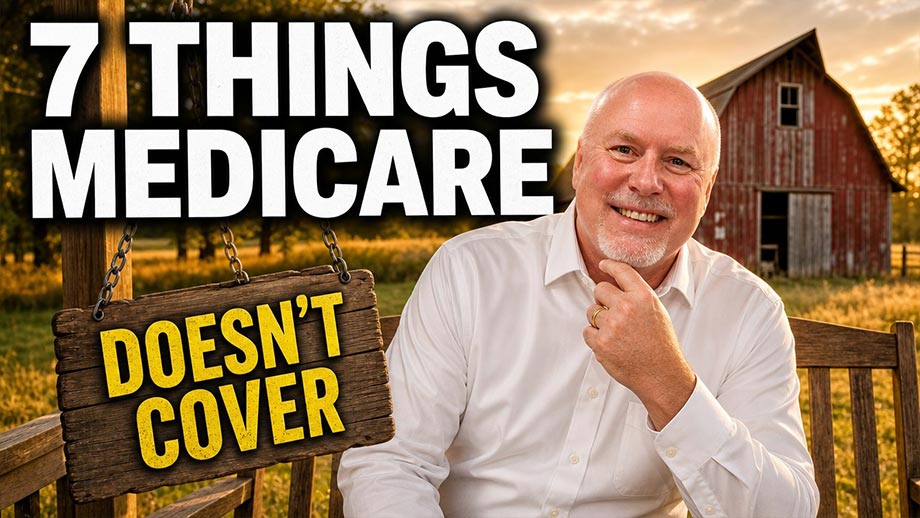
Direct answer: Medicare is comprehensive for hospital and medical care, but it has real, well-defined gaps: prescription drugs, routine dental care, routine vision care, hearing exams and hearing aids, comprehensive annual physicals, long-term custodial care, and care outside the United States. Each gap has a way to fill it — through Part D, Medicare Advantage, Medigap, or standalone insurance — but none of them are covered automatically just because you have Original Medicare. Knowing these gaps before you need care is what prevents an expensive surprise.
Gap 1: Prescription Drugs
Original Medicare Parts A and B handle a great deal, but outpatient prescription medications aren’t part of that coverage. If you assume Medicare has your prescriptions covered by default, that’s the surprise waiting at the pharmacy counter. Part D prescription drug plans exist specifically to fill this gap, either as a standalone plan alongside Original Medicare or bundled into a Medicare Advantage plan.
Gap 2: Dental Care
Routine dental care isn’t part of Original Medicare — no coverage for checkups, cleanings, X-rays, fillings, root canals, extractions, implants, bridges, or dentures. Medicare does cover dental care in narrow, specific medical scenarios (like clearing an infection before certain surgeries), but that’s a far cry from routine care. A standalone dental plan or a Medicare Advantage plan with dental benefits are the two main paths to filling this gap.
Gap 3: Vision Care
Original Medicare handles serious eye conditions well — cataracts, glaucoma, and similar medically necessary treatment are covered. But routine eye exams, eyeglasses, and contact lenses fall outside that coverage entirely. Some Medicare Advantage plans include modest vision benefits, or you can pay directly for routine vision care out of pocket.
Gap 4: Hearing Exams and Hearing Aids
Original Medicare covers medically necessary care related to hearing-related medical conditions, but routine hearing exams and hearing aids themselves aren’t covered. As with dental and vision, Medicare Advantage plans are the primary route to hearing aid coverage, with benefits varying significantly by plan.
Gap 5: A Comprehensive Annual Physical
This one surprises a lot of people. Original Medicare covers an annual “wellness” visit, which is focused on updating your personalized prevention plan and screening for specific risk factors — it’s genuinely useful, but it isn’t the same as a comprehensive head-to-toe physical exam. If you’re expecting the kind of full physical you might remember from before Medicare, that’s not what this visit is designed to be.
Gap 6: Nursing Homes and Long-Term Care
This is where the gap gets financially serious. Medicare covers skilled nursing facility care, but only under specific conditions and for a limited time — and under standard Original Medicare rules, that generally requires a qualifying inpatient hospital stay of at least three consecutive days first. There are some exceptions to this rule now: certain Accountable Care Organizations have an approved waiver, and a newer CMS demonstration program waives the requirement for a small set of specific procedures. Medicare Advantage plans are also permitted to waive the three-day requirement, and many do — so this rule genuinely differs depending on your coverage type, which is worth confirming directly with your plan or hospital rather than assuming.
Even when skilled nursing coverage applies, it’s not an open-ended benefit — coverage is capped, and it isn’t designed for indefinite stays.
Custodial care — help with daily living activities like bathing, eating, and dressing — isn’t covered at all, regardless of how it’s structured. This is the single biggest gap on this list in terms of financial risk. Long-term care simply isn’t something Medicare pays for, so budgeting, saving, or considering long-term care insurance is a separate planning conversation entirely.
Gap 7: Care Outside the United States
Original Medicare generally doesn’t cover care received outside the U.S., except in a small number of narrow, specific circumstances. If you need medical care while traveling internationally, you could be responsible for the full cost yourself.
Some Medigap plans include foreign travel emergency coverage up to plan limits, which can be a meaningful safety net if you travel internationally. Otherwise, a separate travel insurance policy is worth considering for genuine peace of mind.
Bottom Line
None of this means Medicare falls short as coverage — it handles hospital and medical care well, and these seven gaps are specific, well-known, and entirely plannable around once you know they exist. Whether you stay with Original Medicare and add a Medigap Supplement plus a Part D plan, or choose a Medicare Advantage plan with built-in extra benefits, understanding these gaps ahead of time is what turns a potential financial surprise into a manageable, informed decision.
Key Takeaways
Does Medicare cover prescription drugs?
Not through Original Medicare directly. You need a separate Part D plan, either standalone or bundled into a Medicare Advantage plan.
Does Medicare cover dental, vision, or hearing care?
Only in narrow, medically necessary circumstances. Routine dental, vision, and hearing care all require separate coverage through Medicare Advantage or standalone insurance.
Does Medicare cover an annual physical exam?
Not a comprehensive physical. Medicare covers an annual wellness visit focused on prevention planning and risk screening, which is more limited than a traditional full physical.
Does Medicare cover nursing home care?
Only skilled nursing facility care under specific conditions and for a limited time — not long-term custodial care, which Medicare never covers.
Do I need a three-day hospital stay before Medicare covers skilled nursing care?
Generally yes, under standard Original Medicare rules, though exceptions exist through certain ACO waivers, some newer CMS demonstration programs, and many Medicare Advantage plans, which are permitted to waive this requirement.
Does Medicare cover care when I travel internationally?
Generally no, except in narrow, specific circumstances. Some Medigap plans include foreign travel emergency coverage, or you can purchase separate travel insurance.
How do I fill these Medicare coverage gaps?
Through a combination of a Part D plan, Medigap Supplement, or a Medicare Advantage plan with added benefits — the right combination depends on which gaps matter most to your situation.
By submitting your information, you agree that a licensed insurance agent may contact you by phone or email to answer your questions or provide additional information about Medicare Advantage or Prescription Drug Plans or Medicare Supplement Insurance plans. This is an advertisement for insurance.
Privacy Policy

We do not offer every plan available in your area. Currently we represent six organizations offering thirty products in your area. Please contact Medicare.gov, 1-800-MEDICARE, or your local State Health Insurance Program (SHIP) to get information on all of your options.
Not connected with or endorsed by the United States government or the federal Medicare program.
HEARTWISE, a Senior Health Services affiliate
Copyright © 2026 HEARTWISE, LLC | Privacy Policy