

Direct answer: HMO plans require a primary care physician and referrals to see specialists, using a tighter provider network in exchange for lower out-of-pocket costs. PPO plans skip both requirements, letting you see any provider — in-network or out — without a referral, in exchange for higher premiums and cost-sharing. For a full side-by-side breakdown of both plan types, see our complete HMO vs. PPO comparison guide. This piece focuses specifically on why that cost gap exists — the actual mechanics behind PPO plans costing more, not just the fact that they do.
Why Do PPO Plans Actually Cost More Than HMOs?
This comes down to two structural factors, not just “more flexibility costs more” as a vague principle:
Broader network accessibility. A PPO plan maintains contracts and negotiated rates with a much wider set of providers, and also has to cover care from providers it has no contract with at all when you go out-of-network. That breadth is inherently more expensive for the insurer to support than an HMO’s tighter, more predictable network.
Higher administrative complexity. Managing a PPO’s structure means negotiating rates across a larger provider base and processing claims from both in-network and out-of-network care — a more complex administrative operation than an HMO’s more centralized, referral-gated system. That complexity has a real cost, and it shows up in your premium and cost-sharing.
HMOs, by contrast, are simply more cost-effective for insurers to run: a smaller network, referral requirements that reduce unnecessary specialist visits, and more predictable claims patterns all translate into insurers being able to offer lower premiums.
How Do Out-of-Pocket Costs Actually Compare?
With an HMO:
With a PPO:
It depends entirely on how you use healthcare, not on which plan type is “better” in the abstract:
The math genuinely depends on your actual healthcare pattern, not a general assumption that one plan type is more cost-effective than the other for everyone.
Bottom Line
PPO plans cost more than HMO plans for concrete, structural reasons — broader network obligations and higher administrative complexity, not just an arbitrary “flexibility tax.” Whether that added cost is worth it depends entirely on how often you actually use specialists, whether you travel, and how much you value not needing a referral. Reach out to an independent Medicare broker for help running the actual cost comparison against your specific healthcare pattern.
Key Takeaways
Why do PPO Medicare Advantage plans cost more than HMOs?
Because PPOs maintain a broader provider network and cover out-of-network care, both of which are more expensive and administratively complex for insurers to support than an HMO’s tighter, referral-gated network.
Are HMO out-of-pocket costs always lower than PPO costs?
Generally yes for routine, in-network care, but if you frequently need out-of-network or specialist care, an HMO’s lack of that coverage can end up costing more overall than a PPO’s higher premium.
Does a PPO’s higher cost mean it’s a worse value?
Not necessarily. If you travel often or need frequent specialist access without referrals, the added premium can still be worth it compared to the alternative costs under an HMO.
How do I know which plan type will actually save me money?
It depends on your specific healthcare usage pattern — how often you see specialists, whether you travel, and how much you value not needing referrals — not a general rule favoring one plan type.
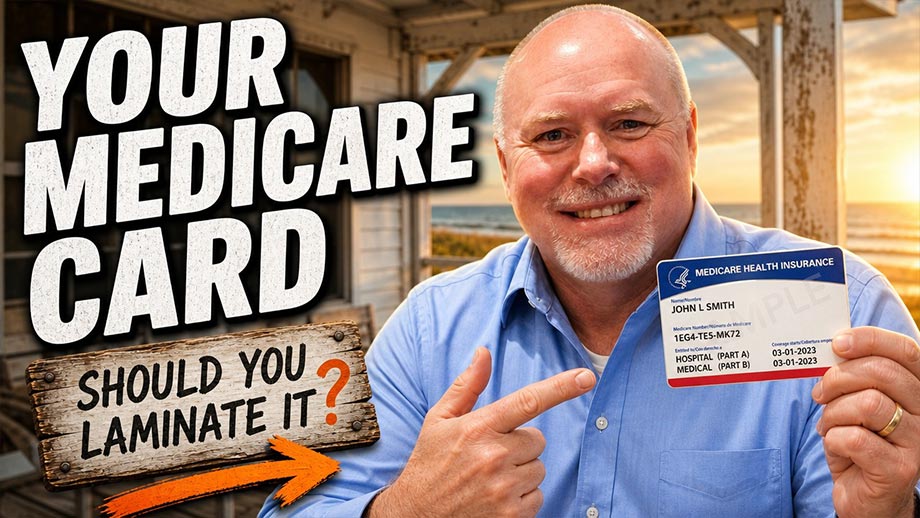
Direct answer: No — while it isn’t technically illegal, both the Social Security Administration and the Centers for Medicare & Medicaid Services (CMS) advise against laminating your Medicare card. Lamination can interfere with security features built into the card and can create scanning or verification problems for healthcare providers and staff. It also permanently locks in your card’s current information, which becomes a real problem if any of your details ever need to be updated. A protective plastic sleeve gives you similar durability benefits without any of these downsides.
Why Do Medicare Cards Need Protection in the First Place?
Medicare cards are made of a paper-based material rather than durable plastic, which makes them genuinely more susceptible to wear, tearing, and moisture damage through regular handling over time. It’s a reasonable concern, and protecting the card from physical degradation matters — the question is really about the right way to do that, not whether protection is worth pursuing.
What Does Official Guidance Actually Say About Lamination?
The Social Security Administration has long advised against laminating Social Security cards specifically because lamination can obscure built-in security features designed to prevent tampering or counterfeiting. CMS extends the same guidance to Medicare cards: lamination can interfere with security elements and can make it harder for healthcare providers to properly scan or verify your card details during check-in.
So while lamination isn’t against the rules in a strict legal sense, it runs against the specific guidance from the agencies that issue and rely on the card, for reasons with real practical consequences — not just an abstract technicality.
What’s a Better Way to Protect My Medicare Card?
A transparent plastic card sleeve or a dedicated card-holder pocket in your wallet gives you meaningful protection against spills, bending, and general wear, without the security or scanning issues lamination introduces. This is the option officially recommended in place of lamination, and it achieves largely the same durability goal.
What If My Medicare Card Gets Damaged, Lost, or Stolen?
Report it right away to limit potential misuse and avoid disruption to your medical services. Contact the Social Security Administration by phone or online, or visit a local Social Security office in person if you prefer face-to-face help.
Protect your personal information throughout this process — only share Medicare details through official channels, and stay alert for scam attempts. Medicare will never call you unprompted demanding personal information or threatening to cancel your benefits; if that happens, hang up and report it directly to Medicare.
How Do I Get a Replacement Medicare Card?
Log into your secure account at Medicare.gov, where you can print a temporary card immediately and order an official replacement to be mailed to you. You can also call 1-800-MEDICARE (1-800-633-4227) to request a replacement by phone. After requesting a new card, keep track of your request — mailed replacements typically take a few weeks to arrive, so following up if it hasn’t shown up within that window is worth doing.
Bring your original card to healthcare appointments to avoid any discrepancy or issue when providers verify your information. For everyday carrying, though, many people choose to keep a photocopy in their wallet and store the original securely at home — this limits your exposure if your wallet is ever lost or stolen, while still giving you quick access to a usable copy when you need it.
A photo on your phone works well too, and for some people it’s more practical than a paper copy. Take a clear photo of both sides of your Medicare card, including your Medicare number and coverage start dates, and keep it somewhere secure on your phone. That way, the information is available whenever you need to reference it or provide it over the phone — at a pharmacy, when scheduling an appointment, or during a call with a provider’s office — even if you’ve deliberately left the physical card at home for safekeeping. This isn’t a replacement for having the physical card at in-person appointments where a provider needs to verify it directly, but it’s a genuinely useful backup for the situations where you just need the number itself.
If your original does go missing, having either a paper photocopy or a phone photo also gives you a helpful stopgap while you request an official replacement.
Bottom Line
Lamination isn’t illegal, but it goes against clear, current guidance from CMS and SSA — and for good practical reasons, not just bureaucratic caution: it can interfere with security features and provider scanning, and it locks you out of easily updating the card if your information changes. A simple plastic sleeve gives you the durability benefit you’re actually after without any of that downside, and keeping a phone photo of your card gives you a handy way to access your number and coverage dates even when you’ve left the physical card safely at home. If your card is ever lost, damaged, or stolen, act quickly — request a replacement through Medicare.gov or by phone, and stay alert for anyone trying to exploit the situation to obtain your personal information.
Key Takeaways
Can I laminate my Medicare card?
It’s not illegal, but CMS and SSA both advise against it, since lamination can interfere with security features and provider scanning, and prevents easy updates if your card information changes.
Why does official guidance discourage laminating Medicare cards?
Because lamination can obscure built-in security features meant to prevent tampering, and can make it harder for healthcare providers to scan or verify the card.
What should I use to protect my Medicare card instead of laminating it?
A transparent plastic card sleeve or a dedicated wallet card slot offers similar protection from wear and moisture without the security or scanning downsides of lamination.
How do I replace a lost or damaged Medicare card?
Log in to your account at Medicare.gov to print a temporary card and order an official replacement, or call 1-800-MEDICARE to request one by phone.
Should I carry my original Medicare card or a photocopy?
Bring your original to healthcare appointments to avoid any verification issues, but consider keeping a photocopy or phone photo for everyday reference and storing the original securely at home.
Can I just keep a photo of my Medicare card on my phone instead of carrying it?
For everyday reference — like providing your number over the phone or at a pharmacy — yes, a photo works well and lets you leave the physical card safely at home. For in-person appointments where a provider needs to verify the physical card directly, bring the original.


Direct answer: Medicare is federal health insurance primarily serving people 65 and older, plus younger people with certain disabilities or conditions like permanent kidney failure requiring dialysis. It functions as a genuine financial safety net — covering hospital stays, outpatient care, and (with the right additional coverage) prescriptions, so a serious health event doesn’t have to mean financial devastation on top of a medical crisis. For a full breakdown of each part, see our complete Medicare overview; this piece focuses specifically on why Medicare matters as protection and how to actually choose the right coverage for your situation.
Why Does Medicare Matter?
Two things make Medicare genuinely significant, beyond just being “health insurance for seniors”:
Financial protection. Healthcare costs accumulate quickly, and without coverage, a single serious illness or hospitalization can threaten someone’s financial stability in retirement. Medicare exists specifically to prevent that outcome, covering vital services so medical care remains accessible without requiring beneficiaries to choose between treatment and financial security.
Support beyond age 65. Medicare isn’t exclusively for people over 65. Younger people with qualifying disabilities or specific conditions — including permanent kidney failure requiring dialysis and ALS — can access Medicare regardless of age, which matters enormously for people facing serious health challenges earlier in life than most Medicare planning assumes.
Medicare breaks down into four parts, each addressing a different piece of your healthcare needs:
Here’s the same information converted from a table into a clean, reader-friendly list format:
Medicare Part A (Hospital Insurance)
Medicare Part B (Medical Insurance)
Medicare Part C (Medicare Advantage)
Medicare Part D (Prescription Drug Coverage)
Beyond these four parts, Medigap (Medicare Supplement Insurance) exists specifically to help cover the copayments, coinsurance, and deductibles that Original Medicare (Parts A and B) leaves you responsible for — it’s not a fifth “part” of Medicare itself, but a widely used way to fill the gaps the core program leaves open.
This is really the central question everything else feeds into, and it comes down to three factors:
Your personal health situation. Consider any ongoing conditions, medications you take regularly, and whether keeping specific healthcare providers matters to you — these factors point toward different combinations of Parts A/B/D, Medigap, or Medicare Advantage far more than any generic “best plan” ranking could.
The real costs involved. Medicare provides meaningful financial relief, but it isn’t free — premiums, deductibles, and copayments still apply throughout. Whether a Medigap policy makes sense for offsetting those costs, or whether Medicare Advantage’s bundled structure fits better, depends on how you’d rather structure your healthcare spending.
Your enrollment timing. Medicare’s enrollment windows carry real consequences — missing them can delay your coverage start or result in permanent penalties added to your premium. Knowing which window applies to your situation before you need it is far better than discovering the deadline after it’s passed.
With the right groundwork, Medicare doesn’t have to feel overwhelming. It’s designed to function as a genuine safety net, providing stability and access to care when you need it most — but getting the most out of it requires some upfront understanding of how the parts fit together and which enrollment windows apply to your situation.
If you’re unsure where to start, asking questions early is far better than guessing and discovering a gap or penalty later. A little preparation now translates directly into more confidence and financial predictability in how you manage your healthcare going forward.
Bottom Line
Medicare’s real value is as a safety net — protecting you financially while ensuring access to necessary care, whether you’re 65 or younger with a qualifying condition. Understanding the four parts, knowing where Medigap fits in to cover the gaps, and matching your specific health needs and enrollment timing to the right combination of coverage is what turns Medicare from a source of confusion into the stability it’s actually designed to provide. Reach out to an independent Medicare broker if you want help mapping your specific situation to the right coverage — at no cost to you.
Key Takeaways
What is Medicare insurance?
Federal health insurance primarily for people 65 and older, plus younger people with qualifying disabilities or specific conditions, functioning as a financial safety net against healthcare costs.
Who qualifies for Medicare besides people over 65?
People under 65 with certain disabilities, or specific conditions like permanent kidney failure requiring dialysis or ALS, qualify regardless of age.
What are the four parts of Medicare?
Part A (hospital), Part B (medical/outpatient), Part C (Medicare Advantage, private plans), and Part D (prescription drugs).
What is Medigap, and is it part of Medicare?
Medigap is separate supplemental insurance that helps cover the copayments, coinsurance, and deductibles Original Medicare leaves you responsible for — not one of Medicare’s four official parts.
How do I choose the right Medicare coverage?
Consider your personal health needs and preferred providers, the total real costs involved (not just the premium), and your specific enrollment timing to avoid penalties or delays.
What happens if I miss a Medicare enrollment deadline?
You may face delayed coverage or a permanent penalty added to your premium, depending on which enrollment period you missed and why.

Direct answer: Medicare is comprehensive for hospital and medical care, but it has real, well-defined gaps: prescription drugs, routine dental care, routine vision care, hearing exams and hearing aids, comprehensive annual physicals, long-term custodial care, and care outside the United States. Each gap has a way to fill it — through Part D, Medicare Advantage, Medigap, or standalone insurance — but none of them are covered automatically just because you have Original Medicare. Knowing these gaps before you need care is what prevents an expensive surprise.
Gap 1: Prescription Drugs
Original Medicare Parts A and B handle a great deal, but outpatient prescription medications aren’t part of that coverage. If you assume Medicare has your prescriptions covered by default, that’s the surprise waiting at the pharmacy counter. Part D prescription drug plans exist specifically to fill this gap, either as a standalone plan alongside Original Medicare or bundled into a Medicare Advantage plan.
Gap 2: Dental Care
Routine dental care isn’t part of Original Medicare — no coverage for checkups, cleanings, X-rays, fillings, root canals, extractions, implants, bridges, or dentures. Medicare does cover dental care in narrow, specific medical scenarios (like clearing an infection before certain surgeries), but that’s a far cry from routine care. A standalone dental plan or a Medicare Advantage plan with dental benefits are the two main paths to filling this gap.
Gap 3: Vision Care
Original Medicare handles serious eye conditions well — cataracts, glaucoma, and similar medically necessary treatment are covered. But routine eye exams, eyeglasses, and contact lenses fall outside that coverage entirely. Some Medicare Advantage plans include modest vision benefits, or you can pay directly for routine vision care out of pocket.
Gap 4: Hearing Exams and Hearing Aids
Original Medicare covers medically necessary care related to hearing-related medical conditions, but routine hearing exams and hearing aids themselves aren’t covered. As with dental and vision, Medicare Advantage plans are the primary route to hearing aid coverage, with benefits varying significantly by plan.
Gap 5: A Comprehensive Annual Physical
This one surprises a lot of people. Original Medicare covers an annual “wellness” visit, which is focused on updating your personalized prevention plan and screening for specific risk factors — it’s genuinely useful, but it isn’t the same as a comprehensive head-to-toe physical exam. If you’re expecting the kind of full physical you might remember from before Medicare, that’s not what this visit is designed to be.
Gap 6: Nursing Homes and Long-Term Care
This is where the gap gets financially serious. Medicare covers skilled nursing facility care, but only under specific conditions and for a limited time — and under standard Original Medicare rules, that generally requires a qualifying inpatient hospital stay of at least three consecutive days first. There are some exceptions to this rule now: certain Accountable Care Organizations have an approved waiver, and a newer CMS demonstration program waives the requirement for a small set of specific procedures. Medicare Advantage plans are also permitted to waive the three-day requirement, and many do — so this rule genuinely differs depending on your coverage type, which is worth confirming directly with your plan or hospital rather than assuming.
Even when skilled nursing coverage applies, it’s not an open-ended benefit — coverage is capped, and it isn’t designed for indefinite stays.
Custodial care — help with daily living activities like bathing, eating, and dressing — isn’t covered at all, regardless of how it’s structured. This is the single biggest gap on this list in terms of financial risk. Long-term care simply isn’t something Medicare pays for, so budgeting, saving, or considering long-term care insurance is a separate planning conversation entirely.
Gap 7: Care Outside the United States
Original Medicare generally doesn’t cover care received outside the U.S., except in a small number of narrow, specific circumstances. If you need medical care while traveling internationally, you could be responsible for the full cost yourself.
Some Medigap plans include foreign travel emergency coverage up to plan limits, which can be a meaningful safety net if you travel internationally. Otherwise, a separate travel insurance policy is worth considering for genuine peace of mind.
Bottom Line
None of this means Medicare falls short as coverage — it handles hospital and medical care well, and these seven gaps are specific, well-known, and entirely plannable around once you know they exist. Whether you stay with Original Medicare and add a Medigap Supplement plus a Part D plan, or choose a Medicare Advantage plan with built-in extra benefits, understanding these gaps ahead of time is what turns a potential financial surprise into a manageable, informed decision.
Key Takeaways
Does Medicare cover prescription drugs?
Not through Original Medicare directly. You need a separate Part D plan, either standalone or bundled into a Medicare Advantage plan.
Does Medicare cover dental, vision, or hearing care?
Only in narrow, medically necessary circumstances. Routine dental, vision, and hearing care all require separate coverage through Medicare Advantage or standalone insurance.
Does Medicare cover an annual physical exam?
Not a comprehensive physical. Medicare covers an annual wellness visit focused on prevention planning and risk screening, which is more limited than a traditional full physical.
Does Medicare cover nursing home care?
Only skilled nursing facility care under specific conditions and for a limited time — not long-term custodial care, which Medicare never covers.
Do I need a three-day hospital stay before Medicare covers skilled nursing care?
Generally yes, under standard Original Medicare rules, though exceptions exist through certain ACO waivers, some newer CMS demonstration programs, and many Medicare Advantage plans, which are permitted to waive this requirement.
Does Medicare cover care when I travel internationally?
Generally no, except in narrow, specific circumstances. Some Medigap plans include foreign travel emergency coverage, or you can purchase separate travel insurance.
How do I fill these Medicare coverage gaps?
Through a combination of a Part D plan, Medigap Supplement, or a Medicare Advantage plan with added benefits — the right combination depends on which gaps matter most to your situation.

Direct answer: Original Medicare (Parts A and B) does not cover routine hearing exams, hearing aids, or fittings — and a Medigap Supplement doesn’t add this coverage either, since Medigap only supplements what Original Medicare already covers. If hearing aid coverage matters to you, a Medicare Advantage plan is generally the path to it, but coverage varies enormously between plans — from a modest discount program to comprehensive coverage of premium devices. Knowing exactly what to check before enrolling is what separates a plan that actually meets your needs from one that looks good in a brochure but falls short when you need it.
Why Doesn’t Original Medicare or Medigap Cover Hearing Aids?
This surprises a lot of people, especially those who assume Medigap fills every gap left by Original Medicare. It doesn’t — Medigap only supplements the cost-sharing on services Original Medicare already covers. Since routine hearing care was never covered by Original Medicare in the first place, there’s nothing for Medigap to supplement. This exclusion applies regardless of which Medigap plan letter you have, from the most basic to the most comprehensive.
How Do Medicare Advantage Plans Cover Hearing Aids?
Medicare Advantage plans are private alternatives to Original Medicare, and many go beyond Original Medicare’s coverage by including hearing benefits. But “includes hearing coverage” can mean very different things depending on the plan — some offer a basic discount program with reduced pricing through a provider network, while others offer meaningful allowances or even full coverage toward premium hearing technology. There’s no standardization here the way there is with Medigap, so you genuinely have to read the specifics rather than assume based on a plan’s general marketing.
Use this as a working checklist when comparing Medicare Advantage plans specifically for hearing benefits:
Bottom Line
Hearing aid coverage isn’t something to assume you have — Original Medicare and Medigap both leave it uncovered entirely, and Medicare Advantage coverage varies too widely to take at face value from a plan’s general marketing. Going through this checklist against a plan’s actual Evidence of Coverage document, rather than its summary brochure, is what actually tells you whether a plan meets your hearing care needs. If you need help sorting through the specifics, reach out to an independent Medicare broker — we’re here to listen.
Key Takeaways
Does Original Medicare cover hearing aids?
No. Neither Part A nor Part B covers routine hearing exams, hearing aids, or fittings.
Does Medigap cover hearing aids?
No. Medigap only supplements costs for services Original Medicare already covers, and since hearing aids aren’t covered by Original Medicare, there’s nothing for Medigap to supplement.
Do all Medicare Advantage plans cover hearing aids the same way?
No. Coverage ranges from basic discount programs to full coverage of premium devices, varying significantly by plan and insurer.
What should I check before choosing a Medicare Advantage plan for hearing coverage?
Provider network requirements, whether routine exams are included, fitting session coverage, how much of the device cost is covered, and whether maintenance and batteries are included.
Are hearing aid fittings covered under Medicare Advantage hearing benefits?
Often yes, but the number of included fitting or adjustment sessions varies by plan — worth confirming directly rather than assuming unlimited fittings are included.

Direct answer: Guaranteed issue periods are specific situations where insurers must sell you a Medigap policy regardless of your health status — no medical underwriting, no denial based on pre-existing conditions. They exist outside your one-time Medigap Open Enrollment Period, triggered by specific events: switching back to Original Medicare within 12 months of trying Medicare Advantage, losing Medicare Advantage coverage in your area, or your employer group health plan ending. Acting within the required timeframe is critical — these protections come with strict deadlines, typically 63 days from the triggering event.
This is known as your Medicare Advantage “trial right,” and it covers two distinct scenarios:
Scenario 1 — First-time Medicare Advantage enrollment at 65. If you enrolled in a Medicare Advantage plan when you first became eligible for Medicare at 65, and within 12 months you decide it’s not the right fit, you can switch back to Original Medicare and buy any Medigap plan sold in your state — no medical underwriting, full plan choice.
Scenario 2 — Dropping Medigap for Medicare Advantage. If you had Original Medicare with a Medigap policy and switched to Medicare Advantage for the first time — at any age, not just 65 — you get the same 12-month trial protection. One important detail here: unlike Scenario 1, you’re not guaranteed access to any Medigap plan. You can reclaim your exact previous policy from the same carrier if it’s still offered, or if it’s not, you’re limited to a specific, narrower set of standardized plan letters rather than full plan choice.
Timing matters in both scenarios. You generally need to apply for your new Medigap policy within a window that opens roughly 60 days before your Medicare Advantage coverage ends and closes 63 days after it ends. Miss that window, and you lose the guaranteed issue protection even if you’re still technically within your 12-month trial period.
One more thing worth knowing: this trial right is generally a once-per-lifetime protection. If you use it and later try Medicare Advantage again, you typically don’t get a second trial right the next time around.
You’re protected here too, and the timing works the same way — roughly a 63-day guaranteed issue window from the point you lose coverage:
What If My Employer Group Health Plan Ends?
If you have Original Medicare Part A and B as your primary coverage and your employer group health plan ends through no fault of your own, you qualify for a guaranteed issue period to purchase a Medigap policy — again, generally within roughly 63 days of losing that employer coverage.
Why Do Guaranteed Issue Periods Matter?
Outside your one-time Medigap Open Enrollment Period, insurers in most states can require you to answer health questions and can deny coverage or charge more based on your health history. Guaranteed issue periods are the exception — specific, protected windows where none of that applies, regardless of which scenario triggered them.
If you find yourself in any of these situations, the most important thing to understand is that these windows are time-limited. Acting promptly — ideally the moment you know a qualifying event is happening, not after it’s already occurred — is what actually secures the protection.
Bottom Line
Guaranteed issue periods exist precisely for situations where your Medicare Advantage plan changes, your coverage ends through no fault of your own, or you decide Medicare Advantage isn’t the right fit within your trial year. Knowing which scenario applies to you — and more importantly, exactly how many days you have to act — is what separates guaranteed acceptance from facing medical underwriting you might not pass. An independent Medicare broker can confirm your specific guaranteed issue timeline and help you act before the window closes.
Key Takeaways
What is a Medigap guaranteed issue period?
A specific, time-limited window during which an insurer must sell you a Medigap policy regardless of your health status, with no medical underwriting.
What is the Medicare Advantage trial right?
A 12-month protection allowing you to try Medicare Advantage and switch back to Original Medicare with guaranteed Medigap access — either from first enrolling in MA at 65, or from dropping an existing Medigap plan to try MA for the first time at any age.
Do I get to choose any Medigap plan during my trial right?
It depends on the scenario. If you enrolled in MA at 65 as your first coverage, yes, any plan. If you dropped an existing Medigap plan for MA, you’re generally limited to your prior plan or a narrower set of standardized options.
How much time do I have to use a guaranteed issue right?
Generally around 63 days from the qualifying event — such as your Medicare Advantage coverage ending or your employer coverage terminating. Missing this window can mean losing the protection.
Can I use the Medicare Advantage trial right more than once?
Generally no — it’s typically a once-per-lifetime protection. Trying Medicare Advantage again after already using your trial right usually doesn’t come with the same guarantee.
Does moving to a new area trigger a guaranteed issue period?
Yes, if moving takes you outside your Medicare Advantage plan’s service area, or if your plan stops serving your location entirely.
What happens if I miss my guaranteed issue window?
You’ll likely need to go through medical underwriting for any future Medigap application, and insurers can deny coverage or charge more based on your health history.
By submitting your information, you agree that a licensed insurance agent may contact you by phone or email to answer your questions or provide additional information about Medicare Advantage or Prescription Drug Plans or Medicare Supplement Insurance plans. This is an advertisement for insurance.
Privacy Policy

We do not offer every plan available in your area. Currently we represent six organizations offering thirty products in your area. Please contact Medicare.gov, 1-800-MEDICARE, or your local State Health Insurance Program (SHIP) to get information on all of your options.
Not connected with or endorsed by the United States government or the federal Medicare program.
HEARTWISE, a Senior Health Services affiliate
Copyright © 2026 HEARTWISE, LLC | Privacy Policy