
HOUSTON, TX – November 1, 2025 Picture this: You’re a Texas senior on a fixed income, opening your mail to discover skyrocketing Medicare premiums, vanishing drug coverage, and a maze of confusing options that could drain your savings overnight.
As Medicare’s Annual Election Period (AEP) unfolds for 2026 plan changes, millions of beneficiaries are confronting historic disruptions – higher Part D deductibles up to $615, out-of-pocket caps rising to $2,100, shifting formularies, and insurer exits creating massive coverage gaps.
Rodney POWELL, recognized as a #1 Texas Local Medicare Agent on Medicare Agents Hub and widely known as “the Medicare Video Guy,” is expanding his services to double his client base and support more beneficiaries amid this turmoil.
As an independent broker licensed in over 30 states, Powell delivers unbiased, expert guidance to seniors in Houston, Dallas, Fort Worth, San Antonio, Austin, Arlington, Plano, Frisco, New Braunfels, Pearland, Sugar Land, The Woodlands, Southlake, Katy, Cypress, and beyond – helping them navigate rising costs and secure optimal coverage.
“The Inflation Reduction Act of 2022 was intended to lower drug costs, but it’s unleashing the biggest Medicare shakeup in decades,” said Powell. “Medicare Part B premiums are increasing by $21.50 to $206.50 monthly, while average stand-alone Part D premiums may drop to $34.50 – yet some plans could spike by up to $50 a month. Major carriers like UnitedHealthcare, Aetna, and Humana are scaling back Medicare Advantage and Part D offerings, depreciating benefits, shrinking networks, and leaving gaps that hit fixed-income households hardest.”
Without proper guidance, seniors risk paying thousands more for diminished protection, facing tough choices between medications and essentials. Powell warns: “This isn’t just a bump in the road – for many, the road is practically washed out.”
Powell offers a clear path forward: “Review your plan annually during AEP. I help compare Medicare Supplements, like Plan G, for comprehensive coverage at the lowest premiums, or Medicare Advantage for potential savings – always verifying that doctors are in-network. As an independent broker representing top carriers such as Physicians Mutual, (AARP) UnitedHealthcare, Aetna, Humana, HealthSpring, Devoted, and more, I provide objective recommendations tailored to your needs.”
Powell urges: “Insist on transparent, licensed advice. Hang up on unsolicited pitches and never share details with unverified sources.”
For free tools and resources, visit MedicareVideoGuide.com or subscribe to Powell’s educational YouTube channel at YouTube.com/@MedicareVideoGuy for short, straightforward videos demystifying Medicare basics, open enrollment tips, and plan comparisons.
In a volatile market where many are retreating, Powell is leading client service through education and transparency. “The true cost isn’t just the premium – it’s the regret of poor choices with real consequences,” he emphasizes. “You’ve heard, ‘Knowledge is power’ – it’s also protection.”
Rodney POWELL is an independent Medicare broker and a #1 Texas Local Medicare Agent, committed to empowering seniors with clear, unbiased advice on Medicare Supplements (Medigap), Advantage plans, and prescription drug coverage. Serving Texas communities and licensed in over 30 states, he excels in personalized consultations and online education. For more, visit MedicareVideoGuide.com.
Media Contact:
Rodney Powell
MedicareVideoGuide.com
Free Educational Workshops Help HR Teams Navigate Medicare Enrollment, Penalties, and Employer Plan Integration
THE WOODLANDS, Texas — September 1, 2025 — Rodney POWELL, recognized as the #1 top-rated local Medicare agent in Texas by Medicare Agents Hub among 4,499 agents, has launched free workshops for human resources (HR) professionals on coordinating Medicare with employer group health plans. These no-cost sessions, available virtually or onsite, address Medicare enrollment timelines, eligibility rules, penalty avoidance, and integration with employer coverage to support employees turning 65. Complementing the workshops, a 30-second promotional spot on a FOX Business Network local affiliate, targeting HR leaders to highlight how this education can reduce employee confusion and potentially lower group health costs.
Powell’s initiative responds to rising inquiries from aging workforces, providing neutral, Centers for Medicare & Medicaid Services (CMS)-compliant information without sales pitches or the collection of personal health data. Sessions last 45-60 minutes, with live Q&A, focusing on the basics of Medicare Parts A (hospital insurance) and B (medical insurance), the Initial Enrollment Period (three months before to three months after age 65), and coordination rules. For employers with 20 or more employees, group plans are typically primary, with Medicare secondary; for smaller employers, Medicare often serves as the primary payer.
As an independent Medicare broker licensed in over 30 states and serving all of Texas — including The Woodlands, New Braunfels, Lakeway, Boerne, Southlake, and Coppell — Powell specializes in unbiased comparisons of Medicare Supplement (Medigap) plans like Plan G, Medicare Advantage (Part C) plans, and Part D prescription drug coverage. He represents carriers such as Physicians Mutual, UnitedHealthcare (AARP), Aetna, Humana, Devoted, HealthSpring, and KelseyCare. MedicareVideoGuide.com offers these comparisons at no cost, helping individuals and employers navigate options based on premiums, out-of-pocket costs, networks, and formularies.
Many employees nearing age 65 face confusion over Medicare enrollment deadlines and how it interacts with employer plans. Missing the Initial Enrollment Period can lead to late enrollment penalties, such as a 10% permanent premium increase for Part B for each 12-month delay or a 1% increase per month for Part D without creditable coverage. HR teams often handle these questions without specialized resources, leading to increased administrative burdens, higher costs, and employee dissatisfaction.
POWELL’s free Medicare workshops deliver clear education on these topics, empowering HR professionals to guide employees effectively. The FOX Business promo spot emphasizes key timelines and benefits, reaching a broader audience of benefits leaders.
Contact via MedicareVideoGuide.com, phone at 855-360-5263. Sessions are flexible, virtual or onsite.
Workshops focus on information only; no fees, sales, or personal health data collection.
These resources benefit HR teams at organizations of all sizes, employees approaching Medicare eligibility, and employers seeking to optimize their health benefits. Large firms (with 20 or more employees) learn how to maintain primary group coverage, while smaller ones understand Medicare’s primary role. Individuals gain insights into comparing plans for gaps in Original Medicare, such as deductibles.
In 2025, POWELL has been the #1 ranking in Texas from Medicare Agents Hub, with top rankings in cities like Southlake and Coppell. This builds on over 50 five-star Google reviews praising his clear, unbiased guidance.
Medicare Agents Hub highlights agent satisfaction metrics, underscoring Powell’s expertise. Google client reviews highlight the time saved and informed decisions, with one noting a reduction in confusion during benefits planning.
“HR professionals play a vital role in employee well-being, but Medicare complexities can lead to costly errors,” says Rodney Powell, independent Medicare broker at MedicareVideoGuide.com. “These free workshops deliver clear, compliant education to help teams coordinate coverage, avoid penalties, and ease administrative loads—fostering better retention and cost management.”
“A fantastic session—very informative and easy to understand!” said Edwina Pellegrini, CEBS, CPSP, Senior Director of Total Rewards at Strategic Link Consulting, a Kennesaw, Georgia-based firm.
“Medicare coordination can prevent costly penalties and support employee retention by clarifying options alongside employer coverage,” says Rodney Powell.
Call to Action
Schedule a free workshop today at MedicareVideoGuide.com or call 855-360-5263. For more on Medicare basics, visit Rodney POWELL’s video channel on YouTube at https://youtube.com/@MedicareVideoGuy.
Media Contact
Rodney POWELL, the “Medicare Video Guy”
855-360-5263 | MedicareVideoGuide.com
“Medicare Video Guy” YouTube Channel: https://youtube.com/@MedicareVideoGuy
Follow on LinkedIn: https://linkedin.com/company/heartwise65
Rodney POWELL, familiar to many as the “Medicare Video Guy,” is the #1 top-rated local Medicare agent across Texas in 2025 with Medicare Agents Hub, a leading industry directory of independent Medicare health insurance agents.
This marks Powell’s inaugural year at the top, among 4,335 local Medicare agents across key Texas regions, including The Woodlands, New Braunfels, Lakeway, Boerne, and Southlake. This underscores Powell’s commitment to delivering exceptional Medicare guidance in these communities.
Powell has built a loyal following through his expert insights on Medicare Supplement (Medigap) plans, Medicare Advantage (Part C) options, and prescription drug coverage (Part D). His educational platform, MedicareVideoGuide.com, boasts over 50 five-star Google reviews, reflecting 100% client satisfaction and unwavering trust from those he assists.
At the core of Powell’s approach is a mission to educate and empower Medicare beneficiaries with transparent, no-cost concierge services. He provides personalized, independent advice to help seniors navigate the complexities of Original Medicare (Parts A and B), select optimal Supplement plans like Plan G or Plan N, explore Advantage plans, and secure comprehensive coverage for prescriptions, dental care, vision, and more.
“‘Do it yourself’ isn’t a Medicare plan — having a trusted friend to guide you is priceless,” says Powell. “Most people I meet can access better coverage or lower premiums, and my consultations are always free.”
Licensed in more than 30 states and affiliated with Senior Health Services, Powell offers unbiased recommendations and ongoing support. As an independent agent, he represents top carriers including Physicians Mutual, UnitedHealthcare, Aetna, Humana, Devoted, HealthSpring, and KelseyCare.
For Medicare beneficiaries seeking clarity, confidence, and personalized advocacy, Powell stands as a reliable partner dedicated to making Medicare work seamlessly for individuals and families.
Rodney POWELL, familiar to many as the “Medicare Video Guy,” is the #1 top-rated Medicare agent in Texas, focused on empowering beneficiaries with informed healthcare decisions. Through education and tailored support, he has established himself as a go-to advisor for Medicare in 2025.
Media Contact
Rodney POWELL
MedicareVideoGuide.com
YouTube Channel: The “Medicare Video Guy”
LinkedIn: The “Medicare Video Guy” | MedicareVideoGuide.com

Direct answer: Medicare Part D is optional prescription drug coverage offered through private insurers approved by Medicare. It fills a gap that Original Medicare (Parts A and B) leaves open, since neither covers most outpatient prescription drugs. You can get Part D as a standalone plan or bundled into a Medicare Advantage plan. The program recently underwent its most significant structural redesign since it launched, driven by the Inflation Reduction Act, which eliminated the old “coverage gap” and introduced a firm annual cap on what you pay out of pocket.
Coverage depends on your specific plan’s formulary — its list of covered medications. Formularies generally include generics, brand-name drugs, and specialty drugs for conditions like cancer, though specialty drugs often require prior authorization.
Drugs are organized into tiers, with lower tiers carrying lower cost-sharing and higher tiers (typically specialty drugs) carrying more. Standard exclusions across nearly all plans include over-the-counter medications, drugs for cosmetic purposes (such as hair growth), and weight-loss medications, though coverage rules for some of these categories have been shifting and are worth double-checking against your specific plan.
If a medication you need isn’t on your plan’s formulary, you can request a formulary exception with your doctor’s support. Staying within your plan’s pharmacy network also matters — using an out-of-network pharmacy typically costs more or isn’t covered at all.
Certain drug categories are protected by federal rule regardless of tier: immunosuppressants, antidepressants, antipsychotics, anticonvulsants, antiretrovirals (HIV treatment), and antineoplastics (cancer treatment). Plans must cover substantially all drugs in these categories.
This is the most important update if you haven’t reviewed your coverage in the last couple of years. Under the Inflation Reduction Act, Part D underwent a structural redesign:
Bottom line: if the last time you seriously reviewed Part D was more than a year or two ago, the cost structure has changed enough that your old assumptions about “the donut hole” or catastrophic coverage thresholds are likely out of date.
How Do I Sign Up for Medicare Part D?
You need Medicare Part A or Part B to be eligible. The main enrollment windows:
If you’re eligible and don’t have other creditable drug coverage but delay enrolling, you’ll face a late enrollment penalty — a permanent surcharge added to your premium based on how long you went without coverage. This penalty applies for as long as you’re enrolled in Part D, so it’s worth avoiding even if you’re not currently taking medications.
What Does Medicare Part D Cost?
Costs vary by plan and include a monthly premium (higher earners may also owe an income-related surcharge, IRMAA), a deductible, and tiered copays or coinsurance based on your specific medications. Once your out-of-pocket spending reaches your plan year’s cap, covered drug costs drop to nothing for the remainder of the year.
When comparing plans, don’t evaluate on premium alone. Add up your expected total cost — premium plus what you’ll actually pay for your specific medications at your specific pharmacy — since a lower-premium plan can end up costing more overall if it places your medications on higher cost-sharing tiers.
Do I Really Need Medicare Part D?
Part D isn’t mandatory, but it’s a reasonable default for most people. If you have creditable drug coverage elsewhere — through an employer or union plan, for example — you may be able to delay enrollment without penalty. Without creditable coverage, delaying enrollment triggers the late penalty described above.
Part D plans offer flexibility as standalone coverage or bundled with Medicare Advantage, along with features like broader formularies, lower-cost generic options, and the newer payment-smoothing option. For most beneficiaries, having the coverage in place — even with modest use — provides meaningful protection against unpredictable drug costs.
Quick FAQ
Bottom Line
Medicare Part D helps manage prescription drug costs through private, Medicare-approved plans, and it recently became significantly more predictable thanks to the elimination of the old coverage gap and the introduction of a firm annual out-of-pocket cap. Enroll on time to avoid a permanent late penalty, and review your specific plan every year during AEP — formularies and costs shift annually, and the plan that worked for you last year may not be your best option this year. An independent Medicare broker can run your specific medication list against available plans in your area at no cost to you.
Key Takeaways
What is Medicare Part D?
Optional prescription drug coverage offered through private insurers approved by Medicare, filling the drug-coverage gap left by Original Medicare.
Do I need Medicare Part D if I don’t take medications?
Generally yes, unless you have other creditable drug coverage. Delaying enrollment without creditable coverage triggers a permanent late enrollment penalty even if you’re not currently taking prescriptions.
What is the Part D late enrollment penalty?
A permanent surcharge added to your premium, based on how long you went without Part D or other creditable drug coverage after becoming eligible.
Has Medicare Part D changed recently?
Yes, significantly. The Inflation Reduction Act eliminated the old coverage gap (“donut hole”) and introduced a hard annual out-of-pocket cap, along with a capped monthly insulin cost and a voluntary payment-smoothing option.
What is the Medicare Prescription Payment Plan?
A voluntary option that lets you spread your out-of-pocket Part D drug costs into predictable monthly installments across the plan year instead of paying larger sums at the pharmacy early in the year. It doesn’t reduce your total cost, only when you pay it.
How do I know if my drugs are covered?
Check the plan’s formulary for your specific medications and their tier placement. If a drug isn’t listed, you can request a formulary exception with your doctor’s help.
When can I switch Part D plans?
During the Annual Enrollment Period each fall, for coverage starting the following January. Certain qualifying life events may open a Special Enrollment Period outside that window.


Direct answer: Medicare Part B is outpatient medical insurance, covering doctor visits, preventive screenings, durable medical equipment, lab tests, mental health services, and physical therapy. While Medicare Part A covers inpatient hospital stays, Part B covers the medical care you receive without being admitted overnight. Together they form Original Medicare. Part B carries a monthly premium, an annual deductible, and standard coinsurance, with enrollment timing that directly affects whether you pay a permanent late penalty.
Category: Outpatient Care
What’s Included: Doctor visits, outpatient surgeries, and medical care that does not require an overnight hospital stay.
Category: Preventive Services
What’s Included: Screenings such as mammograms and colonoscopies, recommended vaccines, and annual wellness visits.
Category: Mental Health
What’s Included: Therapy, counseling, and other behavioral health services provided by licensed mental health professionals.
Category: Durable Medical Equipment (DME)
What’s Included: Doctor-prescribed medical equipment, including wheelchairs, walkers, oxygen equipment, and similar devices.
Category: Lab Tests and Imaging
What’s Included: Diagnostic and monitoring services such as blood tests, X-rays, MRIs, and other imaging procedures.
Category: Physical Therapy
What’s Included: Rehabilitation services designed to improve mobility, restore function, and help manage pain.
Many preventive services are covered at no additional cost when they meet Medicare’s specific guidelines for frequency and medical criteria — worth confirming with your provider before scheduling, since exceeding the covered frequency can trigger out-of-pocket costs even for an otherwise-covered service.
Part B costs scale with your income and generally include three components:
Budgeting around all three components — not just the premium — gives a realistic picture of your annual Part B costs.
Who Is Eligible for Medicare Part B?
If you’re already receiving Social Security benefits when you become eligible, enrollment is automatic. Otherwise, you need to actively sign up.
Important update if you’ve delayed enrollment before: under a change to enrollment rules, coverage through the General Enrollment Period now starts the month immediately following your enrollment, rather than being delayed for months as it once was. This is a meaningful improvement — it used to mean a potentially long gap in coverage depending on when in the window you signed up. If you’re relying on older information (including some outdated articles still circulating online), don’t assume you’ll face that old delay.
How Do I Avoid the Part B Late Enrollment Penalty?
Missing your enrollment window without qualifying for a Special Enrollment Period triggers a permanent penalty: your premium increases by roughly 10% for each full 12-month period you were eligible but didn’t enroll. This penalty applies for as long as you have Part B — it doesn’t expire or get reassessed later. Enrolling on time, or confirming you qualify for a Special Enrollment Period before delaying, is the only way to avoid it.
For these gaps, many beneficiaries look to Medicare Advantage plans or supplemental insurance, since Original Medicare alone doesn’t fill them.
Bottom Line
Medicare Part B covers the outpatient and preventive backbone of your healthcare — doctor visits, screenings, DME, and more — but leaves routine dental, vision, and hearing care uncovered. Enrollment timing matters more than most people realize: missing your window triggers a permanent premium penalty, though the General Enrollment Period no longer carries the long coverage-start delay it once did. An independent Medicare broker can walk through your specific enrollment timing and coverage gaps at no cost to you.
Key Takeaways
What does Medicare Part B cover?
Outpatient doctor visits, preventive screenings and vaccines, mental health services, durable medical equipment, lab tests and imaging, and physical therapy.
How much does Medicare Part B cost?
A monthly premium (higher for high earners), an annual deductible, and 20% coinsurance on most covered services after the deductible is met.
Who is eligible for Medicare Part B?
People 65 and older who are U.S. citizens or long-term legal residents, people under 65 who’ve received SSDI for a qualifying period, and people with ESRD or ALS regardless of age.
When can I enroll in Medicare Part B?
During your seven-month Initial Enrollment Period around your 65th birthday, the annual General Enrollment Period if you missed your IEP, or a Special Enrollment Period if you delayed due to active employer coverage.
What happens if I enroll late?
You may face a permanent premium penalty of roughly 10% for each 12-month period you were eligible but didn’t enroll, unless you qualified for a Special Enrollment Period.
Does coverage still start in July if I use the General Enrollment Period?
No — this changed. Coverage now begins the month immediately following enrollment during the General Enrollment Period, not on a delayed fixed date as it once did.
What doesn’t Medicare Part B cover?
Routine dental care, routine vision exams and glasses, cosmetic procedures, hearing aids, and long-term custodial nursing home care.

Direct answer: Medicare is federal health insurance primarily for people 65 and older, plus certain younger people with disabilities or specific medical conditions. It’s structured in four parts: Part A (hospital insurance), Part B (medical insurance), Part C (Medicare Advantage, a private-plan alternative), and Part D (prescription drug coverage). Parts A and B together are called Original Medicare. Understanding how these parts fit together — and where the real coverage gaps sit — is the foundation for every other Medicare decision you’ll make.
Part A is premium-free for most people with sufficient work history; Part B, Part C, and Part D each carry their own cost structure that varies by plan and income.
How Does Medicare Part A Work?
Part A covers hospital stays, skilled nursing facility rehabilitation following a qualifying hospital stay, hospice care, and limited home health services. Most people with a sufficient Medicare-taxed work history (roughly ten years) pay no premium for Part A. Without that work history, you can still buy in, but at an ongoing cost.
Worth knowing: Original Medicare (Parts A and B together) has no annual out-of-pocket maximum. Unlike Medicare Advantage plans, which are required to cap your yearly spending, Parts A and B cost-sharing can accumulate indefinitely during a serious illness. This is the main reason many beneficiaries pair Original Medicare with a Medigap policy.
How Does Medicare Part B Work?
Part B covers outpatient care — doctor visits, lab tests, imaging, preventive screenings, and durable medical equipment. It carries a monthly premium for everyone, with higher earners paying an income-related surcharge (IRMAA), plus an annual deductible and standard coinsurance on most services. Many preventive services are covered at no additional cost when they meet Medicare’s specific frequency and eligibility guidelines.
How Does Medicare Advantage (Part C) Work?
Medicare Advantage plans, offered through private insurers, bundle Parts A and B into a single plan, typically adding Part D drug coverage and supplemental benefits like dental, vision, and hearing that Original Medicare doesn’t provide. In exchange, most plans require you to use a specific provider network and may require referrals or prior authorization for certain services.
The Medicare Advantage market shifts meaningfully from year to year — insurer participation, network composition, and available benefits are not static. More than half of eligible beneficiaries are now enrolled in Medicare Advantage rather than Original Medicare, and that share has grown steadily. Given this, reviewing your specific plan’s network and benefits regularly matters more than assuming continuity.
Part D is optional prescription drug coverage through private, Medicare-approved insurers, available standalone or bundled into a Medicare Advantage plan. Coverage depends on your plan’s formulary — its list of covered drugs, organized into cost-sharing tiers.
Part D recently underwent a significant structural redesign. The old “coverage gap” (once nicknamed the donut hole) has been eliminated, replaced by a simplified three-phase structure — deductible, initial coverage, and catastrophic — with a hard annual cap on what you pay out of pocket for covered drugs. Insulin now carries a capped monthly cost regardless of plan design, and a voluntary payment-smoothing option lets you spread drug costs into monthly installments rather than paying larger sums upfront. If it’s been a while since you reviewed Part D, these changes are worth understanding — your old assumptions about catastrophic coverage thresholds are likely outdated.
If you or your spouse have a sufficient Medicare-taxed work history, Part A coverage is typically premium-free.
If you miss your Initial Enrollment Period and don’t qualify for a Special Enrollment Period, the annual General Enrollment Period gives you another chance to sign up — with coverage now starting the month immediately after you enroll, a meaningful improvement over the extended delay that used to apply under older rules.
What’s the Difference Between Medicare and Medicaid?
Medicare is primarily age- or disability-based federal insurance, available regardless of income. Medicaid is income-based assistance, jointly run by federal and state governments, targeted at people with limited financial resources. Some people qualify for both simultaneously (“dual eligible”), which can significantly reduce out-of-pocket costs.
What are the different parts of Medicare? Part A (hospital), Part B (medical), Part C (Medicare Advantage), and Part D (prescription drugs).
How do I get Medicare? Apply through Social Security online, by phone, or in person during your enrollment window, or automatically if you’re already receiving Social Security benefits.
What does Medicare cover? Depends on the part — hospital stays, doctor visits, preventive care, and prescriptions, spread across the four parts.
Who is eligible for Medicare? People 65 and older, or younger people with qualifying disabilities, ESRD, or ALS.
How is Medicare different from Medicaid? Medicare is age/disability-based and available regardless of income; Medicaid is income-based.
Can I change my Medicare plan? Yes, during the Annual Enrollment Period each fall, or during a Special Enrollment Period if you have a qualifying life event.
What are Medicare Advantage plans? Private plans that bundle Parts A, B, and typically D, often with added benefits like dental, vision, and hearing.
Bottom Line
Medicare’s four parts work together to cover hospital care, outpatient care, and prescriptions, with Medicare Advantage offering a private, bundled alternative to Original Medicare. The details that trip people up most: Original Medicare has no out-of-pocket cap, Part D’s cost structure recently changed substantially, and enrollment timing carries permanent financial consequences if missed. Reviewing your specific coverage annually — rather than assuming it’s unchanged — is the single most useful habit for staying ahead of these shifts. An independent Medicare broker can walk through your specific situation at no cost to you.
Key Takeaways
What are the four parts of Medicare?
Part A (hospital insurance), Part B (medical/outpatient insurance), Part C (Medicare Advantage), and Part D (prescription drug coverage).
Is Medicare free?
Part A is typically premium-free with sufficient work history. Parts B, C, and D each carry costs that vary by plan, coverage choice, and income.
What’s the difference between Original Medicare and Medicare Advantage?
Original Medicare (Parts A and B) offers broad provider access nationwide but no out-of-pocket cap. Medicare Advantage bundles coverage through a private insurer with a network, often adding extra benefits and a spending cap.
Who is eligible for Medicare?
People 65 and older who are U.S. citizens or long-term legal residents, people under 65 with a qualifying disability, and people with ESRD or ALS regardless of age.
How do I enroll in Medicare?
Automatically if you’re already receiving Social Security benefits, or through an active application via Social Security during your enrollment window.
What happens if I miss my Medicare enrollment window?
You may face a permanent late enrollment penalty on Part B (and Part A if you have to pay a premium for it), unless you qualify for a Special Enrollment Period.
How is Medicare different from Medicaid?
Medicare is based on age or disability status, regardless of income. Medicaid is income-based assistance for people with limited financial resources. Some people qualify for both.
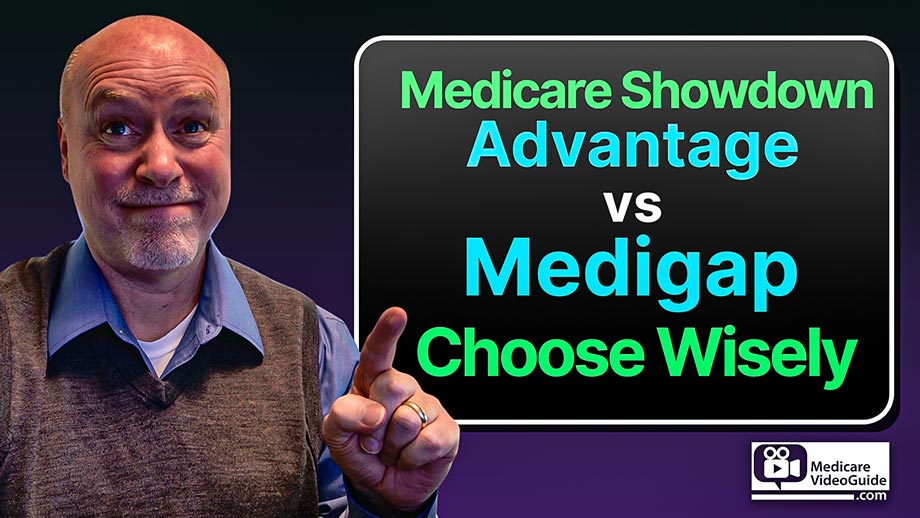
Advantage Plan versus Medigap Supplement – this is the Medicare fork-in-the-road. You’ll choose one or the other, and your decision can affect your experience in ways that affect your life. Let’s look at an easy-to-understand comparison between these approaches to your Medicare coverage.
Medicare Part C, also known as Medicare Advantage, is a replacement plan. They are developed, sponsored, and provided by insurance companies contracted with Medicare. These include Part A (inpatient hospital insurance), Part B (outpatient medical insurance), and usually Part D prescription drug coverage.
Key Features:
If you are a person who wants low upfront costs, some extra benefits, and is willing to do your healthcare within specific networks, Medicare Advantage plans may be your choice.
What Are Medigap Plans?
Medicare Supplements, or Medigap, are designed to help cover the costs not covered in original Medicare. These plans are available in the private health insurance market but are quite different from Medicare Advantage.
Key Features:
Medigap plans are highly appealing to those who frequently travel or prefer to visit healthcare providers of their choice.
Premium Costs
Medicare Advantage plans usually have lower premiums but higher out-of-pocket costs. Medigap plans, on the other hand, come with monthly premiums but almost no out-of-pocket costs thereafter.
Network Constraints
Medicare Advantage plans restrict you to their contracted doctors and healthcare facilities. PPO plans are more flexible than HMO plans, but going out-of-network will cost you more. In contrast, a Medigap Supplement lets you visit almost any health provider accepting Original Medicare (Part A and Part B).
Supplemental Benefits
Most Medicare Advantage plans offer extra perks such as routine dental, vision, and hearing coverage. Medigap plans do not include these benefits.
Prescription Drugs
Medicare Advantage plans typically have prescription drug coverage. You will need a standalone Part D plan when you have a Medigap Supplement.
Travel Coverage
Advantage plans only cover the services within the plan’s service area. Medigap plans are more portable beyond that. Your coverage goes wherever you go. Any plan you choose will cover emergency medical services while traveling nationwide.
Pros:
Cons:
Pros:
Cons:
The choice between Medicare Advantage and Medigap depends on your own healthcare needs, financial considerations, and preferences. If portability and the freedom of access to almost any provider are important, then you’re better off considering Medigap. If you are sensitive about the cost of premiums and like the expediency of an all-encompassing plan, Medicare Advantage may suit you.
I encourage people to think long-term when considering these choices. Focus on what will matter to your future self and choose your course wisely.
Medicare Advantage plans often include drug coverage. Medigap requires a standalone Part D plan.
Medigap may offer more predictability for those with ongoing healthcare needs due to its comprehensive coverage of out-of-pocket costs.
Yes, but there are specific enrollment periods and rules. Switching from Medicare Advantage to Medigap may require medical underwriting.

Direct answer: Your official Medicare mailing address is updated through the Social Security Administration, not directly through Medicare.gov. Since SSA manages your core Medicare enrollment records, changing your address with them automatically updates it with Medicare too — you can do this online through your my Social Security account, by phone, or in person. Medicare.gov’s own account lets you update other contact details like your phone number or email, but it isn’t a separate channel for changing your official mailing address. Getting this distinction right matters, since assuming the wrong channel updated your address can leave your actual records unchanged.
This isn’t just administrative housekeeping — a few concrete consequences follow from an outdated address:
Since your official Medicare address is managed through Social Security, your real options are:
Online through Social Security — the fastest method. Log into or create a my Social Security account at SSA.gov, go to the “My Profile” tab, and update your contact information there. This simultaneously updates both your Social Security and Medicare records, since they’re tied together.
Call Social Security at their national toll-free number, generally available weekdays during standard business hours. A representative can update your address over the phone.
Visit a local Social Security office in person if you prefer face-to-face help — use SSA’s online office locator to find the nearest one, and consider calling ahead to check on appointment requirements.
Update other contact details through your Medicare account — your MyMedicare.gov account lets you update supplementary information like your phone number or email, but this isn’t a substitute for updating your official mailing address, which must go through Social Security.
One important thing NOT to rely on: updating your address with the U.S. Postal Service (mail forwarding) does not update your address with Social Security or Medicare. These are entirely separate systems, and mail forwarding is, at best, a temporary stopgap — not a substitute for actually updating your official records.
Online updates through your my Social Security account are generally processed faster than phone or in-person requests, which can take longer due to manual processing. Whichever method you use, it’s worth checking back after a couple of weeks to confirm your new address is actually reflected in the system — logging into your account or contacting Social Security directly are both reliable ways to verify the update went through.
Do I Need to Separately Notify My Medicare Advantage, Part D, or Medigap Carrier?
Yes — this is a genuinely important, separate step. If you’re enrolled in a Medicare Advantage, Part D, or Medigap plan, these are administered by private insurance companies that maintain their own records independently of Social Security and Medicare. Updating your address with SSA does not automatically update it with your private plan carrier. Contact them directly as well, since missing this step can mean missing plan-specific communications — and, depending on the nature of your move, could have real implications for your coverage itself. For what a move specifically means for your plan, see our guides on moving to a new state and keeping your Medicare Advantage plan after a move.
Bottom Line
Updating your Medicare address is simpler than it sounds once you know the correct channel: go through Social Security, not Medicare.gov directly, since SSA is what actually maintains your official Medicare mailing address. Online is the fastest method, mail forwarding doesn’t count as an update, and don’t forget to separately notify any private Medicare Advantage, Part D, or Medigap carrier you’re enrolled with. Acting promptly after a move — rather than assuming it’ll sort itself out — is what keeps your coverage information current and avoids missed communications down the line.
Key Takeaways
How do I officially change my address with Medicare?
Through the Social Security Administration — online via my Social Security, by phone, or in person — since SSA manages your core Medicare records and updates them automatically alongside your Social Security information.
Can I update my Medicare address directly on Medicare.gov?
Not your official mailing address. Your MyMedicare.gov account lets you update other contact details like phone or email, but the official address change must go through Social Security.
Does forwarding my mail through USPS update my Medicare address?
No. Mail forwarding is a separate system and does not update your official records with Social Security or Medicare.
How long does it take for an address change to process?
Online updates are generally faster than phone or in-person requests, which involve more manual processing. Check back after a couple of weeks to confirm the update went through.
Do I need to notify my Medicare Advantage or Medigap company separately?
Yes. These are private insurers with their own records, independent of Social Security and Medicare — updating one does not automatically update the other.

Direct answer: No, not generally. Original Medicare (Parts A and B) doesn’t cover medical care outside the U.S. except in a small number of narrow, specific circumstances. If you need care while traveling internationally, you’re typically responsible for the full cost yourself unless you have separate coverage — specifically a Medigap plan that includes the foreign travel emergency benefit, certain Medicare Advantage plans that offer their own international coverage, or standalone travel insurance. Understanding exactly which of these applies to you, and their real limits, matters before you book an international trip, not after something goes wrong.
Are There Any Exceptions Where Medicare Covers Care Abroad?
A few narrow, specific scenarios:
These exceptions are genuinely limited in scope — don’t plan an international trip assuming one will apply to your situation.
This is a detail that trips a lot of people up: not all Medigap plans include foreign travel emergency coverage. Only Plans C, D, F, G, M, and N include this benefit (along with a few older, no-longer-sold plans still held by some longtime enrollees). Plans A, B, K, and L do not include it at all. If international travel matters to you, the specific plan letter you choose is genuinely the deciding factor — don’t assume “having Medigap” automatically means you’re covered abroad.
For the plans that do include it, coverage generally works like this:
Does Medicare Advantage Cover International Travel?
This has genuinely shifted from a flat “no” — worth checking your specific plan rather than assuming it doesn’t apply. Many Medicare Advantage plans now offer some form of worldwide emergency coverage as a supplemental benefit, though the specifics vary significantly by plan. Check your plan’s Evidence of Coverage document directly rather than assuming either that you’re covered or that you’re not.
One structural detail worth knowing if you travel for extended periods: staying outside your Medicare Advantage plan’s service area for too long (commonly around six months) can result in disenrollment from the plan entirely — a genuinely serious consequence for long-term travelers or snowbirds, separate from the international coverage question itself.
Often yes, particularly for extended trips or if you want protection beyond what Medigap’s foreign travel benefit provides. Given the 60-day trip limit, the lifetime cap, and the complete lack of medical evacuation coverage, many people — especially frequent or long-term travelers — still purchase separate travel insurance for the gaps Medigap doesn’t fill. A comprehensive travel insurance policy can also cover things entirely outside Medicare’s scope, like trip cancellation or lost luggage, alongside medical coverage.
Bottom Line
Medicare’s international coverage is genuinely limited — Original Medicare covers almost nothing abroad, and even Medigap’s foreign travel emergency benefit, when you have a qualifying plan, comes with real limits: a 60-day trip window, a lifetime cap, no evacuation coverage, and availability only in specific plan letters. Check exactly what your specific plan includes before you travel, not after you need care, and consider separate travel insurance for extended trips or additional peace of mind. An independent Medicare broker can walk through exactly what your specific plan covers internationally before your next trip.
Key Takeaways
Does Medicare cover me if I get sick while traveling internationally?
Generally no, except in a few narrow exceptions. You’d typically need a qualifying Medigap plan, certain Medicare Advantage plans, or travel insurance for coverage abroad.
Which Medigap plans cover foreign travel emergencies?
Plans C, D, F, G, M, and N include this benefit. Plans A, B, K, and L do not.
How long does Medigap’s foreign travel coverage last during a trip?
Only for emergencies that begin within the first 60 days of your trip — coverage doesn’t extend to emergencies occurring later in an extended trip.
Does Medigap cover medical evacuation back to the U.S.?
No. Medigap’s foreign travel emergency benefit doesn’t cover evacuation or repatriation, a real gap worth addressing with separate travel insurance if it concerns you.
Do Medicare Advantage plans cover international travel?
Some do offer worldwide emergency coverage as a supplemental benefit, but this varies significantly by plan — check your plan’s Evidence of Coverage directly.
Do I need travel insurance if I have Medigap foreign travel coverage?
Often yes, especially for extended trips, given the 60-day limit, lifetime cap, and lack of evacuation coverage under Medigap’s benefit.

Direct answer: Only if your new address is still within your plan’s service area. Medicare Advantage plans are tied to specific geographic boundaries, typically by county, and moving outside that area means you’re no longer eligible for that plan. For the full picture of how a move affects Original Medicare, Part D, and Medigap together, see our complete guide to moving and Medicare coverage. This piece focuses specifically on what to actually do when your Medicare Advantage plan isn’t available at your new address.
How Do I Find Out If My Plan Covers My New Address?
Contact your plan carrier directly before you move, not after. They can confirm whether your specific new address falls within the plan’s service area — this matters even for moves that feel local, since service areas are defined by specific county or ZIP code boundaries, not general geography. A move that feels minor on a map can still put you outside your plan’s actual coverage area.
Two contacts matter here, and both should happen as soon as you know you’re moving:
What Are My Options If My Plan Isn’t Available at My New Address?
You have two real paths:
Enroll in a new Medicare Advantage plan available in your new area. Research your options, compare benefits and out-of-pocket costs — paying particular attention to each plan’s maximum out-of-pocket protection, not just the premium — and enroll during your Special Enrollment Period once you’ve made an informed choice.
Switch to Original Medicare, often paired with a Medigap Supplement. Many people choose this path specifically because it restores broader access to any Medicare-accepting provider nationwide, rather than being tied to a new plan’s network in an unfamiliar area.
This is the process that’s genuinely distinct from simply picking a new Medicare Advantage plan, and it’s worth understanding clearly:
Here’s the detail worth knowing: losing your Medicare Advantage plan because you moved outside its service area is itself a qualifying event that can trigger Medigap guaranteed issue rights — meaning you may be able to enroll in a Medigap policy without medical underwriting specifically because of this circumstance. This is worth confirming directly with a Medigap carrier, since it can make the difference between straightforward acceptance and facing health questions you’d rather avoid.
What If I Don’t Make a Decision in Time?
Missing your enrollment window can create a genuine gap in coverage, so treat the decision with real urgency once you know your plan won’t cover your new address — this isn’t something to put off until you’re fully settled in. Start researching your new area’s options before your move if at all possible, so you’re choosing deliberately rather than scrambling against a deadline.
Bottom Line
If your Medicare Advantage plan doesn’t cover your new address, you have a genuine choice — a new Medicare Advantage plan in your new area, or a return to Original Medicare, often with Medigap added back in. The mechanics of switching back to Original Medicare are simpler than they might sound (a formal disenrollment notice restores your Original Medicare coverage), and the move itself may open a genuine guaranteed issue opportunity for Medigap that’s worth pursuing if broader provider access matters to you. An independent Medicare broker can help you weigh both paths and make sure you don’t miss your enrollment window.
Key Takeaways
Can I keep my Medicare Advantage plan if I move to a different county?
Only if your new address falls within the plan’s service area — confirm directly with your carrier, since service areas are defined by specific boundaries, not general proximity.
How do I switch back to Original Medicare from Medicare Advantage?
Formally disenroll from your current plan, often through a written notice to your carrier, after which you’re automatically back on Original Medicare Parts A and B.
Does losing my Medicare Advantage plan due to a move help me get Medigap without health questions?
Often yes — this circumstance can trigger Medigap guaranteed issue rights, letting you enroll without medical underwriting. Confirm this directly with a Medigap carrier.
Who should I contact first when moving with Medicare Advantage coverage?
The Social Security Administration for your general Medicare records, and your Medicare Advantage plan carrier directly to confirm your new address’s coverage status.
What happens if I don’t choose a new plan in time after moving?
You risk a gap in coverage, so treat the decision urgently and research your new area’s options as early as possible, ideally before the move itself.
By submitting your information, you agree that a licensed insurance agent may contact you by phone or email to answer your questions or provide additional information about Medicare Advantage or Prescription Drug Plans or Medicare Supplement Insurance plans. This is an advertisement for insurance.
Privacy Policy

We do not offer every plan available in your area. Currently we represent six organizations offering thirty products in your area. Please contact Medicare.gov, 1-800-MEDICARE, or your local State Health Insurance Program (SHIP) to get information on all of your options.
Not connected with or endorsed by the United States government or the federal Medicare program.
HEARTWISE, a Senior Health Services affiliate
Copyright © 2026 HEARTWISE, LLC | Privacy Policy