
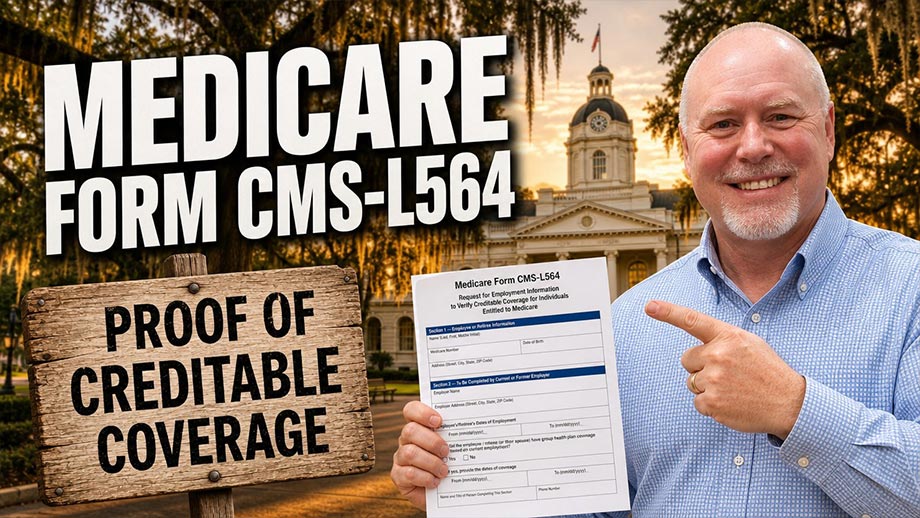
Direct answer: Form CMS-L564, “Request for Employment Information,” is how you prove you had qualifying employer group health coverage when enrolling in Medicare during a Special Enrollment Period (SEP) — the path available if you or your spouse delayed Medicare because of active employer coverage. It must be submitted together with your actual Part B enrollment application, Form CMS-40B, not on its own. Getting this pairing and the documentation right the first time is what keeps your enrollment from stalling or triggering a late penalty you shouldn’t owe.
How Does Delayed Medicare Enrollment Actually Work?
When you first become eligible for Medicare, typically at 65, you have a seven-month Initial Enrollment Period (IEP) — the month you turn 65, plus three months before and three months after.
Missing that window generally pushes you into the General Enrollment Period (GEP), an annual fallback that can carry a late enrollment penalty. But if you or your spouse are still actively working and covered by a qualifying employer group health plan, you may be able to delay Medicare without penalty and use a Special Enrollment Period once that coverage ends instead.
Who Is Eligible to Use Form CMS-L564?
You need to meet several criteria together:
How Do I Get Form CMS-L564?
You can download it directly from CMS’s website, request a copy by calling Social Security, or pick one up in person at your local Social Security office. Confirm you’re using the most current version of the form before filling it out, since using an outdated version can cause processing delays.
The form has three sections:
Section A — Worker Information: your Social Security number, full legal name, birth date, phone number, and current address.
Section B — Employer Information: your employer’s legal name and address, confirmation of group health plan coverage, and the specific start and end dates of that coverage. Precision on the dates matters — your coverage needs to be verified as continuous from the first month you were eligible for Medicare Part B through when it ended, so incomplete or vague date ranges can cause real delays.
Section C — Employer Acknowledgment: a signature from an authorized company representative, the date signed, their title, and a contact phone number.
What Documentation Do I Need to Submit With the Form?
To avoid delays, include:
Make sure every document clearly shows your name and matches the dates on the form itself — mismatches between documents are a common, avoidable cause of processing delays.
How and Where Do I Submit Form CMS-L564?
This is a detail the process gets wrong often enough to call out clearly: Form CMS-L564 must be submitted together with Form CMS-40B, your actual Application for Enrollment in Medicare Part B — not on its own. Submitting the L564 alone without the 40B doesn’t complete your enrollment.
What If My Employer Won’t Complete Section B?
First, try to understand why — it’s often simply unfamiliarity with the form’s purpose, which can be resolved by explaining it’s required for your Medicare Part B enrollment waiver. If your employer remains unwilling to cooperate, contact the Social Security Administration directly for guidance on alternative documentation that may be accepted instead, such as W-2 forms, pay stubs, or health insurance cards showing your coverage.
If you discover an error after submission, contact the SSA to retrieve the form, correct the error in ink with your initials next to the change, and resubmit promptly.
Bottom Line
Form CMS-L564 exists to prove you had qualifying employer coverage so you can enroll in Medicare through a Special Enrollment Period without a late penalty — but it only works when submitted correctly, paired with your CMS-40B application, with accurate dates that match your supporting documentation. Getting this right the first time avoids the delays and resubmissions that can otherwise eat into your SEP window. Keep a copy of everything you submit, and don’t hesitate to follow up with your local Social Security office if you haven’t heard back within a reasonable time.
Key Takeaways
What is Form CMS-L564 used for?
Proving you had qualifying employer group health coverage, so you can enroll in Medicare during a Special Enrollment Period without a late penalty.
Do I submit CMS-L564 by itself?
No. It must be submitted together with Form CMS-40B, your actual Medicare Part B enrollment application — submitting the L564 alone doesn’t complete your enrollment.
What if my employer refuses to fill out Section B?
Contact the Social Security Administration for guidance on alternative documentation, such as W-2 forms, pay stubs, or health insurance cards showing your coverage dates.
How long is my Special Enrollment Period?
Eight months, starting the month after your active employment or employer-based group health coverage ends, whichever happens first.
What happens if I miss my SEP?
You may need to wait for the next General Enrollment Period and could face a permanent late enrollment penalty added to your Part B premium.


Direct answer: Federal law excludes certain categories of drugs from standard Medicare Part D coverage — including cosmetic drugs, fertility drugs, drugs for sexual dysfunction, most over-the-counter medications, and weight-loss drugs when prescribed solely for weight loss. But “excluded” isn’t always absolute: many of these drugs become coverable when prescribed for a different, medically accepted purpose, and — notably — weight-loss GLP-1 medications now have a real, if temporary, path to Medicare coverage through a new federal program separate from standard Part D rules. Understanding both the exclusions and their exceptions matters more than just knowing the blanket rule.
Why Doesn’t Medicare Cover These Drug Categories?
Medicare’s Part D exclusions come from federal law, generally applying to medications considered not medically necessary, not used for a medically accepted indication, or historically viewed as addressing quality-of-life rather than medically essential needs. Part D plans can choose to cover some excluded drugs anyway, but without Medicare’s financial contribution toward that coverage — which typically means a higher plan premium to offset the added cost. Most plans stick to the standard exclusions specifically to keep premiums more competitive.
Barbiturates — sedative-hypnotics used for anesthesia, seizures, and insomnia. Generally excluded due to abuse potential, unless used to treat specific conditions like epilepsy, cancer, or a chronic mental health disorder.
Benzodiazepines — used for anxiety, muscle spasms, and seizures. Typically excluded, though coverage may apply when prescribed for conditions specifically recognized under Part D rules.
Cosmetic drugs — medications solely for cosmetic purposes, like treating wrinkles or promoting hair growth, since they aren’t considered medically necessary.
Fertility drugs — excluded because they aren’t classified as addressing an immediate health necessity, despite their genuine importance for reproductive care.
Drugs for sexual dysfunction — generally classified as quality-of-life treatments rather than medically necessary or life-sustaining ones.
Weight loss or weight gain drugs — excluded when prescribed solely for weight management, unless the underlying condition is itself a diagnosed medical necessity, such as hypothyroidism-related weight gain or morbid obesity meeting specific medical criteria. This category now has a significant, newsworthy exception — see below.
Yes, and this is a meaningful update if you’re working from older information. A new, temporary federal demonstration program now provides Medicare beneficiaries access to select GLP-1 medications specifically approved for weight management — including certain formulations of semaglutide and tirzepatide-based drugs — at a modest, fixed monthly copay, separate from standard Part D coverage rules.
This program operates outside the normal Part D benefit structure and is scheduled to run for a limited period rather than being a permanent coverage change. To participate, you generally need to be actively enrolled in a Part D or Medicare Advantage plan with drug coverage, and your provider needs to certify that the medication is being used as part of a broader program involving diet and lifestyle changes, not as a standalone prescription.
This is separate from, and in addition to, the pre-existing exception: GLP-1 drugs prescribed for an approved medical indication other than weight loss alone — Type 2 diabetes management, cardiovascular risk reduction in patients with existing heart disease, or moderate-to-severe obstructive sleep apnea — have generally already been coverable under standard Part D rules, subject to your specific plan’s formulary and any prior authorization requirements. If you don’t qualify for the new weight-loss-specific program, it’s worth checking whether you might already qualify for coverage under one of these existing indications instead.
Given how new and specific this program’s rules are, confirming your eligibility directly with your Part D plan or Medicare.gov is worth doing rather than assuming either the old “not covered” rule or the new program automatically applies to your situation.
What Other Categories Does Medicare Generally Exclude?
Over-the-counter medications. Standard OTC drugs — pain relievers, cold and flu medication, allergy medicine — aren’t covered under Part D, and reimbursement claims for them are typically denied unless prescribed by a provider as part of a specific Part B-covered service. OTC items are sometimes covered when tied to covered durable medical equipment, like supplies for a nebulizer.
Prescription vitamins and minerals. General-use multivitamins and supplements like vitamin E or C aren’t covered, with exceptions for things like prenatal vitamins or vitamin D analogs prescribed for a specific medical condition.
Non-FDA-approved drugs. Experimental drugs not yet approved for any use, and compounded drugs lacking FDA approval, generally aren’t covered. Checking a medication’s FDA approval status before assuming coverage is worth doing if you’re prescribed something unfamiliar.
What Exceptions Exist for a Medically Accepted Purpose?
Several categories that are excluded by default can become coverable when prescribed for a specific, medically accepted purpose:
Bottom Line
Medicare’s Part D exclusions aren’t as absolute as a simple “not covered” list suggests — many depend entirely on why a drug is being prescribed, not just what the drug is, and the weight-loss drug landscape specifically has shifted meaningfully with the new demonstration program. Checking your specific plan’s formulary, understanding the medical indication your prescription is tied to, and confirming eligibility for any newer programs directly, rather than relying on an older blanket assumption, is what actually determines your coverage. Your plan’s formulary can also change from year to year, so revisiting this during Annual Election Period matters even if nothing about your prescriptions has changed.
Key Takeaways
Does Medicare cover weight-loss drugs?
Not under standard Part D rules when prescribed solely for weight loss, but a new temporary federal demonstration program now provides access to select GLP-1 weight-loss medications at a modest copay, separate from standard rules — check your eligibility directly.
Does Medicare cover Ozempic or Wegovy?
It depends on why it’s prescribed. These may be covered under standard Part D rules for diabetes management or cardiovascular risk reduction, and Wegovy specifically may now also be accessible through the new weight-loss demonstration program if you meet its eligibility criteria.
Does Medicare cover over-the-counter medications?
Generally no, unless prescribed by a provider as part of a Part B-covered service, or tied to covered durable medical equipment.
Does Medicare cover vitamins?
Generally not general-use multivitamins or common supplements, with exceptions for things like prenatal vitamins or vitamin D analogs prescribed for a specific condition.
Can an excluded drug ever become covered?
Yes, if it’s prescribed for a different, medically accepted purpose than its default excluded use — coverage often depends on the reason for the prescription, not just the drug itself.
Where do I check if my specific medication is covered?
Your Part D plan’s formulary, which can vary between plans and change annually — always verify directly rather than relying on general exclusion rules.

Direct answer: An HMO (Health Maintenance Organization) Medicare Advantage plan requires you to choose a primary care provider from the plan’s network, get referrals from that PCP to see specialists, and generally stay within the network for routine care — going outside it means paying the full cost yourself, with one major exception: emergency and urgent care are covered anywhere in the United States, regardless of network. That exception matters more than most HMO overviews let on, and it comes with a real gotcha worth understanding before you need it.
What Role Does My Primary Care Provider Play?
Your PCP is your care coordinator and gatekeeper — the main point of contact for your medical needs, and the person who issues referrals when you need to see a specialist or obtain certain medical equipment. Building a real, ongoing relationship with your PCP genuinely helps here, since they’re the one navigating your care within the network on your behalf. You can typically change your assigned PCP if the relationship isn’t working, by contacting your plan directly — you’re not locked into your initial choice for the life of the policy.
What’s the Emergency and Urgent Care Exception, and Why Does It Matter?
This is the single most important exception to understand about HMO structure, and it’s federally required, not a plan-by-plan courtesy. Medicare Advantage HMO plans must cover emergency care and urgent care anywhere in the U.S., without requiring an in-network provider or a referral, and without additional restrictions.
Practically, this means if you’re traveling and break your arm, or your grandchild’s visit turns into a nasty flu that needs same-day attention, your HMO has to cover it, out-of-network or not.
Here’s what a lot of general HMO explainers leave out, and it’s a genuine trap: the emergency care exception covers stabilizing the emergency itself — it doesn’t automatically extend to follow-up care. If you’re hospitalized while traveling and the hospital refers you to a specialist for follow-up treatment, that specialist may be entirely out-of-network, and that follow-up visit can carry full out-of-network cost-sharing, even though the original emergency was covered without issue.
There is a real protection here worth knowing: your plan is generally required to cover medically necessary follow-up care connected to the emergency if delaying that care would endanger your health. But this isn’t automatic or unlimited — after you’re stabilized, you or your treating doctor are expected to contact your plan to coordinate next steps, and the plan may require its approval for additional services beyond the initial emergency stabilization.
What Happens If I’m a Snowbird or Travel Frequently?
This is where HMO structure genuinely limits you in a way worth planning around. Medicare Advantage HMO plans are approved on a county-by-county basis, and routine, non-emergency care outside your plan’s service area generally isn’t covered at all — only the emergency/urgent care exception applies. If you split time between two states, a routine doctor visit during your months away from home is likely to be an out-of-pocket bill in full, not a higher-cost-sharing situation the way it might be under a PPO.
If this describes your lifestyle, it’s worth seriously weighing an HMO against a PPO or Original Medicare with Medigap, both of which handle this situation very differently.
Two protections worth knowing:
Is There a Version of HMO With More Flexibility?
Yes — some plans, called HMO-POS (Point-of-Service), function like a standard HMO for most care but include a limited allowance to see out-of-network providers for certain services, generally at a higher cost. If HMO’s referral structure appeals to you but the strict no-out-of-network rule feels too rigid, it’s worth checking whether an HMO-POS option exists in your area.
HMO plans work best for people who genuinely stay local for their healthcare, don’t need frequent specialist access, and are comfortable with the referral process as a normal part of getting care. In exchange for these constraints, HMOs typically offer the lowest out-of-pocket costs among Medicare Advantage plan types — a real trade-off, not just a limitation.
Bottom Line
HMO plans deliver cost-effective, structured care for people whose healthcare needs and travel patterns fit within a defined network — but the nationwide emergency/urgent care exception, and its limits around follow-up care, are exactly the kind of detail that matters when something actually happens rather than when you’re comparing plans on paper. Understanding these mechanics before you need them — not while you’re standing in an out-of-state emergency room — is what actually protects you.
Key Takeaways
Does an HMO Medicare Advantage plan cover care when I’m traveling?
Only emergency and urgent care, which must be covered anywhere in the U.S. regardless of network. Routine, non-emergency care outside your service area generally isn’t covered.
Is follow-up care after an emergency automatically covered under an HMO?
Not automatically. The emergency itself is covered, but follow-up care from an out-of-network provider may require your plan’s coordination and approval, and could carry out-of-network cost-sharing without it.
Can I change my primary care provider under an HMO plan?
Yes, generally you can change your assigned PCP by contacting your plan directly if the relationship isn’t working for you.
Is an HMO a good fit for snowbirds or frequent travelers?
Generally not ideal, since routine care outside your plan’s service area typically isn’t covered. A PPO or Original Medicare with Medigap usually handles this situation better.
What is an HMO-POS plan?
A hybrid HMO structure that includes a limited allowance to see out-of-network providers for certain services, usually at a higher cost than staying in-network.
What happens if my provider leaves my HMO’s network while I’m in treatment?
Continued care protections may allow a limited window of continued in-network-rate care, though specifics vary — confirm directly with your plan if this happens.

Direct answer: Three trends once discussed as possibilities are confirmed realities: federal prior authorization reform has been finalized with real enforcement teeth, out-of-pocket costs and benefit variability continue to catch enrollees off guard, and several major insurers are actively narrowing their footprint or exiting less profitable markets. None of this means Medicare Advantage is failing as a program — enrollment continues to grow — but it does mean the coverage landscape looks meaningfully different than it did even a few of years ago, and treating your current plan as a fixed, unchanging thing is a mistake.
Change 1: Prior Authorization Reform Has Actually Happened
This is the most concrete update. CMS finalized a rule fundamentally reshaping how prior authorization works in Medicare Advantage, and the specifics are real, not aspirational:
Why this matters in scale: recent federal data found Medicare Advantage insurers made over 52 million prior authorization determinations in a single year, denying roughly 8% of requests. Only about one in nine denials were appealed — but when people did appeal, over 80% were at least partially overturned. That last figure is worth sitting with: most people who face a denial don’t appeal, but the ones who do are usually at least partially successful. If you’re denied, appealing is a genuinely worthwhile step, not a long shot.
Worth knowing: these prior authorization rules apply specifically to Medicare Advantage, not to Medigap. If you have Original Medicare with a Medicare Supplement, prior authorization generally isn’t a factor in your care at all — a real structural difference worth weighing if this issue matters to you.
Further reform is already in motion, extending similar electronic prior authorization and faster-decision requirements specifically to prescription drugs, which have historically been handled separately from medical service authorizations.
Change 2: Out-of-Pocket Costs and Benefit Variability Remain Real Risks
Even with reform underway, the underlying cost dynamics haven’t disappeared. Most Medicare Advantage plans still advertise low or zero premiums, but deductibles, copayments, and coinsurance continue to add up — especially for anyone managing a chronic condition or needing frequent care.
Supplemental benefits like vision, dental, and hearing coverage remain genuinely inconsistent between plans, and — this is the part that catches people off guard — between years on the same plan. A benefit you relied on this year isn’t guaranteed to look the same at your next renewal. Reviewing your Annual Notice of Change letter carefully each fall, rather than assuming automatic continuation, is the practical defense against an unwelcome surprise.
Change 3: Carriers Are Actively Narrowing Their Footprint
This is no longer a “might happen” — it’s an active, ongoing trend. Facing real financial pressure from regulatory changes, rising healthcare costs, and shifting market dynamics, several large insurers have been deliberately scaling back: exiting less profitable counties, narrowing provider networks, and in some cases prioritizing profit margin over continued enrollment growth rather than expanding aggressively the way the market has for years.
The practical consequence for enrollees is real: a plan available to you this year may not be offered in the same form — or at all — at your next renewal, and even a continuing plan’s network can shrink without much advance notice. This is exactly why confirming your specific doctors and hospitals remain in-network, every year, matters more now than it used to.
Bottom Line
Prior authorization reform, cost and benefit variability, and carrier market pullback aren’t hypothetical concerns anymore — they’re active, confirmed dynamics reshaping Medicare Advantage right now. None of this means the program isn’t working for millions of people; it does mean staying informed and reviewing your specific coverage annually is more important than treating your plan as a set-it-and-forget-it decision. An independent Medicare broker can help you track these changes against your specific plan and needs.
Key Takeaways
Has Medicare Advantage prior authorization actually gotten faster?
Yes. Federal rules now require standard decisions within seven calendar days and urgent decisions within 72 hours, along with mandatory specific denial explanations.
Should I appeal if my Medicare Advantage prior authorization request is denied?
Generally yes. Data shows the large majority of appealed denials are at least partially overturned, even though most denials are never appealed.
Do Medigap plans use prior authorization?
No. Prior authorization rules apply specifically to Medicare Advantage. Original Medicare with a Medigap policy generally doesn’t involve prior authorization.
Are Medicare Advantage insurers actually leaving markets?
Yes. Several major insurers have been actively exiting less profitable counties and narrowing networks, a real and ongoing trend rather than a hypothetical risk.
How often should I check if my doctors are still in-network?
Every year, ideally when reviewing your Annual Notice of Change letter — networks can and do shift without much advance notice.

Direct answer: Medicare Advantage plans build networks of doctors, hospitals, and other providers who’ve agreed to reduced rates in exchange for plan-directed patient volume. HMO, PPO, and HMO-POS plans each handle out-of-network access differently — for the full breakdown of those network structures and how PPO plans specifically work, see our companion guides. What matters just as much as understanding network types, though, is understanding that the directories listing who’s actually in a network are frequently wrong — a real, well-documented problem that can affect your access to care regardless of which network type you choose.
Insurers build these networks by negotiating rates in advance, which lets them predict costs and offer lower premiums in exchange for directing you toward specific providers.
Why Do Provider Directories Often List the Wrong Information?
This is the part that catches a lot of people off guard, and it’s a widely documented problem across the industry, not an isolated issue with any one insurer. Independent audits of Medicare Advantage provider directories have found significant error rates — studies have identified that a substantial share of directory listings contain at least one major inaccuracy, whether that’s outdated contact information, incorrect network status, or a “ghost” listing for a provider who isn’t actually taking new patients under that plan, or isn’t contracted with the plan at all anymore.
This phenomenon has a name in the industry: ghost networks — directories listing providers who aren’t genuinely available to patients under that plan, whether because they’ve left the network, retired, stopped accepting new patients, or were never accurately reflected in the directory to begin with.
Yes, and meaningfully so — this is an active area of regulatory attention right now, not a problem regulators have ignored. Newer federal requirements are pushing Medicare Advantage organizations toward much stricter directory accuracy standards: verifying provider information on a regular, recurring basis, removing providers who’ve left a network within a short window after the change is identified, and conducting regular accuracy audits reported to CMS. Looking ahead, CMS plans to make plan-level directory accuracy scores publicly available, giving beneficiaries a side-by-side way to judge how reliable a given plan’s directory actually is before enrolling.
There’s also a meaningful protection already taking shape for beneficiaries directly: if you’re harmed financially because a directory incorrectly listed a provider as in-network, newer rules are moving toward holding plans accountable for that cost-sharing liability, rather than leaving the burden entirely on you.
How Do I Verify a Provider Is Actually In-Network Before I Enroll or Schedule Care?
Given how common directory inaccuracies are, treat any online directory listing as a starting point, not a confirmed fact:
Bottom Line
Understanding HMO, PPO, and HMO-POS network structures is only half the picture — the other half is recognizing that the directories telling you who’s actually in those networks are wrong often enough that verifying directly, rather than trusting the listing at face value, is a genuinely necessary step, not excessive caution. Regulatory pressure is pushing real improvement here, but until directory accuracy fully catches up, a direct phone call before you enroll or schedule care remains the most reliable way to confirm your provider is actually accessible under your specific plan.
Key Takeaways
Are Medicare Advantage provider directories accurate?
Not always. Independent audits have found a substantial share of directory listings contain at least one major error, such as outdated network status or incorrect contact information.
What is a “ghost network”?
A directory listing for a provider who isn’t actually available under that plan — because they’ve left the network, stopped accepting new patients, or were never accurately listed to begin with.
How do I confirm a provider is really in-network?
Call the provider’s office directly and ask about the specific plan you’re considering, rather than relying solely on an online directory, and re-check closer to your appointment date if time has passed.
Is anything being done to fix inaccurate provider directories?
Yes. Newer federal requirements push Medicare Advantage organizations toward more frequent verification, faster removal of outdated listings, and future public accuracy scoring for plans.
What happens if I’m charged more because a directory incorrectly listed my provider as in-network?
Emerging protections aim to hold plans accountable for this kind of cost-sharing harm, though it’s still worth verifying network status proactively rather than relying on this protection after the fact.
Direct answer: A PPO (Preferred Provider Organization) Medicare Advantage plan lets you see any provider, in-network or out, without a referral — no primary care physician requirement, no specialist gatekeeping. For a full comparison of PPO versus HMO structure and cost, see our complete HMO vs. PPO guide. This piece focuses on something that catches people off guard specifically with PPO out-of-network care: who actually handles the claim, and what that means for you at the time of service.
What Happens When I See an Out-of-Network Provider?
You’ll generally pay more in cost-sharing than you would in-network — that part is well understood. What’s less well understood is the paperwork side: some out-of-network providers require you to pay the full cost upfront, then submit your own reimbursement claim to your Medicare Advantage plan, rather than the provider billing the plan directly the way an in-network provider would.
This is a real, practical difference from how most people are used to interacting with healthcare billing. In-network providers and most Original Medicare providers handle claims filing on your behalf as a matter of course. Out-of-network providers under a PPO aren’t obligated to do that, and many won’t — leaving you to pay at the point of service and then navigate your plan’s reimbursement process afterward.
Before you schedule care with a provider outside your PPO’s network, get clear answers to these questions directly from the provider’s office and your plan:
Getting these answers before your appointment, not after, avoids an unpleasant surprise when the bill arrives.
Are All PPO Plans Structured the Same Way for Out-of-Network Care?
Not entirely. Most PPO plans charge meaningfully more for out-of-network care, consistent with the standard structure. But a smaller subset, sometimes called “passive PPOs,” charge the same cost-sharing whether you stay in-network or go out — effectively functioning like a plan with no real network distinction for cost purposes, while still offering the negotiated PPO network as an option. This isn’t the norm, but it’s worth checking your specific plan’s structure rather than assuming standard PPO cost-sharing rules apply universally.
PPO plans make up a substantial share of the Medicare Advantage market — more than a third of all Medicare Advantage plans are PPO structured, reflecting real demand for the flexibility they offer over HMO plans’ tighter network and referral requirements.
Bottom Line
A Medicare Advantage PPO plan’s real value is the freedom to see any provider without a referral — but that freedom comes with a practical wrinkle worth understanding before you need it: out-of-network care may mean paying upfront and filing your own reimbursement claim, on top of the higher cost-sharing you’d expect. Confirming the billing process and claim deadline directly with both your plan and the provider’s office before your appointment is what actually protects you from an unexpected financial or paperwork burden.
Key Takeaways
Do I have to pay upfront if I see an out-of-network provider under a PPO?
Sometimes, yes. Some out-of-network providers require payment at the time of service and expect you to submit your own reimbursement claim to your plan, rather than billing the plan directly.
How do I know if I’ll need to file my own claim?
Ask the provider’s office directly before your appointment whether they bill your Medicare Advantage plan or require you to pay upfront and file for reimbursement yourself.
Is there a deadline to file an out-of-network reimbursement claim?
Yes, and it’s set by your specific Medicare Advantage plan — often shorter than Original Medicare’s filing window, so confirm the deadline in advance rather than assuming you have ample time.
What is a “passive PPO”?
A less common PPO structure where cost-sharing is the same whether you stay in-network or go out-of-network, unlike standard PPO plans that charge more for out-of-network care.
How common are PPO plans in Medicare Advantage?
More than a third of all Medicare Advantage plans are structured as PPOs.

Direct answer: HMO plans require a primary care physician and referrals to see specialists, using a tighter provider network in exchange for lower out-of-pocket costs. PPO plans skip both requirements, letting you see any provider — in-network or out — without a referral, in exchange for higher premiums and cost-sharing. For a full side-by-side breakdown of both plan types, see our complete HMO vs. PPO comparison guide. This piece focuses specifically on why that cost gap exists — the actual mechanics behind PPO plans costing more, not just the fact that they do.
Why Do PPO Plans Actually Cost More Than HMOs?
This comes down to two structural factors, not just “more flexibility costs more” as a vague principle:
Broader network accessibility. A PPO plan maintains contracts and negotiated rates with a much wider set of providers, and also has to cover care from providers it has no contract with at all when you go out-of-network. That breadth is inherently more expensive for the insurer to support than an HMO’s tighter, more predictable network.
Higher administrative complexity. Managing a PPO’s structure means negotiating rates across a larger provider base and processing claims from both in-network and out-of-network care — a more complex administrative operation than an HMO’s more centralized, referral-gated system. That complexity has a real cost, and it shows up in your premium and cost-sharing.
HMOs, by contrast, are simply more cost-effective for insurers to run: a smaller network, referral requirements that reduce unnecessary specialist visits, and more predictable claims patterns all translate into insurers being able to offer lower premiums.
How Do Out-of-Pocket Costs Actually Compare?
With an HMO:
With a PPO:
It depends entirely on how you use healthcare, not on which plan type is “better” in the abstract:
The math genuinely depends on your actual healthcare pattern, not a general assumption that one plan type is more cost-effective than the other for everyone.
Bottom Line
PPO plans cost more than HMO plans for concrete, structural reasons — broader network obligations and higher administrative complexity, not just an arbitrary “flexibility tax.” Whether that added cost is worth it depends entirely on how often you actually use specialists, whether you travel, and how much you value not needing a referral. Reach out to an independent Medicare broker for help running the actual cost comparison against your specific healthcare pattern.
Key Takeaways
Why do PPO Medicare Advantage plans cost more than HMOs?
Because PPOs maintain a broader provider network and cover out-of-network care, both of which are more expensive and administratively complex for insurers to support than an HMO’s tighter, referral-gated network.
Are HMO out-of-pocket costs always lower than PPO costs?
Generally yes for routine, in-network care, but if you frequently need out-of-network or specialist care, an HMO’s lack of that coverage can end up costing more overall than a PPO’s higher premium.
Does a PPO’s higher cost mean it’s a worse value?
Not necessarily. If you travel often or need frequent specialist access without referrals, the added premium can still be worth it compared to the alternative costs under an HMO.
How do I know which plan type will actually save me money?
It depends on your specific healthcare usage pattern — how often you see specialists, whether you travel, and how much you value not needing referrals — not a general rule favoring one plan type.
Direct answer: Yes — nearly all Medicare Advantage plans now include some form of dental coverage, since Original Medicare doesn’t cover routine dental care and private insurers use dental benefits to differentiate their plans. But “includes dental coverage” varies enormously between plans — some offer only basic preventive care, others cover major procedures like root canals and dentures, and nearly all set an annual dollar cap on what the plan will pay. Comparing the specifics, not just whether dental is “included,” is what actually determines whether a plan meets your needs. For the full picture of what Original Medicare itself does and doesn’t cover for dental, see our complete Medicare dental coverage guide.
Coverage generally falls into three tiers, though not every plan includes all three:
Preventive care — the most consistently covered tier across nearly all plans:
Basic procedures, commonly included though with more cost-sharing:
Major procedures, included in more comprehensive plans:
Preventive care is genuinely the most reliable benefit across the market — many plans cover it at no additional cost. Basic and major procedures vary far more by plan, and some plans exclude major procedures entirely or apply a separate, lower annual cap to them specifically.
How Do Annual Dental Benefit Caps Work?
This is one of the most important, and most overlooked, details in Medicare Advantage dental coverage. Nearly every plan sets an annual maximum on what it will pay toward dental care — once you hit that cap, you’re responsible for the full cost of any additional dental work for the rest of the year.
Unused benefits typically don’t roll over. If your plan’s annual cap isn’t fully used by the end of the year, the unused portion generally disappears rather than carrying into the next year — a small number of plans do offer rollover benefits, but this isn’t standard, so confirm directly rather than assuming it applies to your plan.
Practical takeaway: if you know you need significant dental work and your plan’s annual cap has room remaining, scheduling that work before year-end, rather than waiting, can mean the difference between using benefits you already have and losing them to the annual reset.
Will I Have to Change Dentists?
Possibly, depending on the plan’s network. Medicare Advantage dental benefits typically work through a designated network of participating dentists, and staying in-network is how you access the negotiated, lower-cost rates the plan offers. Going out-of-network — where allowed at all — usually means higher out-of-pocket costs, and some plans don’t cover out-of-network dental care beyond emergencies.
If keeping your current dentist matters to you, confirm they’re in the specific plan’s network before enrolling, not after — provider directories can be outdated, so a direct call to the dental office to confirm is the more reliable check.
One detail worth asking about: some plans will waive standard waiting periods for major dental work if you can show proof of continuous prior dental coverage. This isn’t universal, but it’s worth asking about directly if you’re switching plans and have an immediate need for major work.
What Should I Compare When Choosing a Plan for Dental Coverage?
What If I Need a Procedure My Plan Doesn’t Cover?
You’re responsible for the full cost. Review your plan’s Evidence of Coverage document or contact customer service directly to confirm what is and isn’t covered before scheduling a procedure — discovering a service isn’t covered after the fact is a far worse position than confirming beforehand. If a dental claim is denied and you believe it shouldn’t have been, most plans have an appeal process with a defined filing deadline after the denial notice, so don’t assume a denial is final without checking your appeal rights.
Enrollment generally happens during the Annual Election Period each fall, or during a Special Enrollment Period if you qualify due to a specific life event. You can’t simply add or switch dental coverage anytime outside these windows, so plan your comparison and decision-making around your actual enrollment opportunity rather than waiting until a dental need arises.
Bottom Line
Nearly all Medicare Advantage plans now include some dental benefit, which is a genuine improvement over Original Medicare’s complete exclusion of routine dental care — but the scope, annual caps, and networks vary enormously between plans, and “includes dental” on its own tells you very little. Comparing the specific services covered, the actual annual cap, and whether your dentist is in-network is what turns a generic dental benefit into coverage that actually fits your needs. Reach out to an independent Medicare broker for help comparing dental benefits across plans available in your area at no cost to you.
Key Takeaways
Do Medicare Advantage plans cover dental care?
Yes, nearly all plans include some dental benefit, though coverage scope, networks, and annual caps vary significantly between plans.
What dental services are typically covered?
Preventive care (cleanings, exams, X-rays) is the most consistently covered tier. Basic procedures like fillings and simple extractions are commonly included, while major procedures like root canals, crowns, and dentures vary more by plan.
Do unused dental benefits carry over to the next year?
Generally no. Most plans reset annual dental benefits each year without rollover, though a small number of plans do offer this feature — confirm directly with your plan.
Can I keep my current dentist with Medicare Advantage dental coverage?
Only if your dentist participates in the specific plan’s network. Confirm directly with the dental office rather than relying solely on the plan’s provider directory.
What happens if I need dental work my plan doesn’t cover?
You’re responsible for the full cost. Review your plan’s Evidence of Coverage document or contact customer service before scheduling to confirm coverage, and know your appeal rights if a claim is denied.
When can I enroll in a Medicare Advantage plan with dental benefits?
During the Annual Election Period each fall, or during a Special Enrollment Period if you qualify due to a specific life event.

Direct answer: Innovative Plan G is a variation on standard Medigap Plan G, offered by Physicians Mutual, that trades a temporary deductible period for a permanently lower premium. For the first three calendar years of the policy, you pay a deductible before coverage matches standard Plan G; after that period, the deductible disappears entirely, but your discounted premium rate continues for life. It’s a genuinely distinctive product structure — most Medigap carriers don’t offer anything like it — though it’s worth weighing against Physicians Mutual’s overall pricing and service track record before assuming it’s automatically the best option.
Physicians Mutual Insurance Company was founded in the early 1900s, making it one of the more established organizations in the insurance industry, with over a century of operating history. Their entry into the Medicare supplement market is more recent relative to their overall history, but they’ve built a real presence in this specific niche.
One common point of confusion: Physicians Mutual is not affiliated with Mutual of Omaha, despite both companies being based in Omaha and having similar-sounding names. They are fully independent entities — neither is a subsidiary or offshoot of the other. Physicians Mutual focuses on Medicare supplement and life insurance products, while Mutual of Omaha offers a broader range of insurance products.
How Does the Innovative Plan G Structure Actually Work?
The mechanics are straightforward once you see the timeline:
The core appeal is straightforward: a lower premium during the deductible years, followed by full coverage at that same reduced rate indefinitely. This tends to work best for people who are relatively healthy and comfortable with more out-of-pocket exposure during the first few years, in exchange for meaningful savings over the long run.
What Discounts Does Physicians Mutual Offer?
Several discounts can apply, though availability varies by state and individual circumstances:
These discounts can stack, and combined with the Innovative Plan G structure itself, can add up to real long-term savings — though it’s worth getting a specific quote for your situation rather than assuming every discount applies automatically.
Can I Keep My Current Doctors With This Plan?
Yes. Like any standardized Medigap plan, Innovative Plan G has no provider network. You can see any doctor or facility that accepts Original Medicare, visit any Medicare-approved hospital, and see specialists without needing a referral. This is a structural feature of Medigap generally, not something specific to Physicians Mutual — but it’s worth confirming you understand this benefit clearly if network-free access to your current providers matters to your decision.
Is There Really No Waiting Period for Pre-Existing Conditions?
This needs a more precise answer than a flat “no.” If you enroll during your Medigap guaranteed issue window — generally the one-time period around when you first get Medicare Part B — there’s no waiting period for pre-existing conditions, and this applies to Innovative Plan G the same as any other Medigap plan. Outside that window, however, standard Medigap rules generally allow insurers to impose a pre-existing condition waiting period of up to six months if you didn’t have continuous prior creditable coverage. This isn’t unique to Physicians Mutual — it’s a standard Medigap rule — but it’s worth understanding precisely rather than assuming blanket protection regardless of when you enroll.
What Is the “Second-Chance” Switching Option?
Physicians Mutual offers what they call a two-year selection guarantee: within the first two years of owning the policy, you can switch to a different Physicians Mutual Medigap plan once, without medical underwriting. This gives you a genuine trial period — if Innovative Plan G’s deductible structure turns out not to fit your needs, you have a real path to switch without facing new health questions, which is a meaningful advantage most standard Medigap products don’t offer.
Physicians Mutual offers U.S.-based customer service and largely paperless claims processing. Coverage isn’t limited to your home state — like all Medigap plans, you can see any Original Medicare-accepting provider anywhere in the country.
Worth balancing against this: independent analyses of Physicians Mutual’s Medigap business have found their standard plan pricing tends to run above the regional average, and their customer complaint rate has been assessed as above average for the Medigap category specifically. None of this means the coverage itself is deficient — Medigap benefits are standardized by plan letter regardless of carrier — but it’s a legitimate factor to weigh against the genuinely distinctive Innovative Plan G structure and discount stack, rather than treating pricing and service as settled positives.
Bottom Line
Physicians Mutual’s Innovative Plan G is a real, distinctive offering in the Medigap market — a temporary deductible in exchange for a permanently lower premium, backed by a genuine no-underwriting switching option if it doesn’t work out. It’s worth serious consideration if the structure fits your health situation and risk tolerance. But it’s not automatically the best value across the board: standard pricing tends to run above average, and complaint data is more mixed than a promotional overview might suggest. Comparing Innovative Plan G specifically against both Physicians Mutual’s own standard offerings and competitors’ pricing is the fair way to evaluate whether it’s genuinely the right fit for you.
Key Takeaways
How does Physicians Mutual’s Innovative Plan G work?
It applies an annual deductible for the first three years, then permanently removes the deductible while keeping your premium at the lower Innovative Plan G rate for life.
Is Physicians Mutual affiliated with Mutual of Omaha?
No. They are fully independent companies, despite similar names and both being based in Omaha.
Does Innovative Plan G restrict which doctors I can see?
No. Like all Medigap plans, it has no provider network — you can see any doctor or hospital accepting Original Medicare nationwide.
Is there really no waiting period for pre-existing conditions with this plan?
Only if you enroll during your Medigap guaranteed issue window. Outside that window, standard Medigap rules can impose a waiting period of up to six months, the same as with any Medigap plan.
Can I switch out of Innovative Plan G if it’s not working for me?
Yes, within the first two years, you can switch to a different Physicians Mutual plan once without answering health questions, under their two-year selection guarantee.
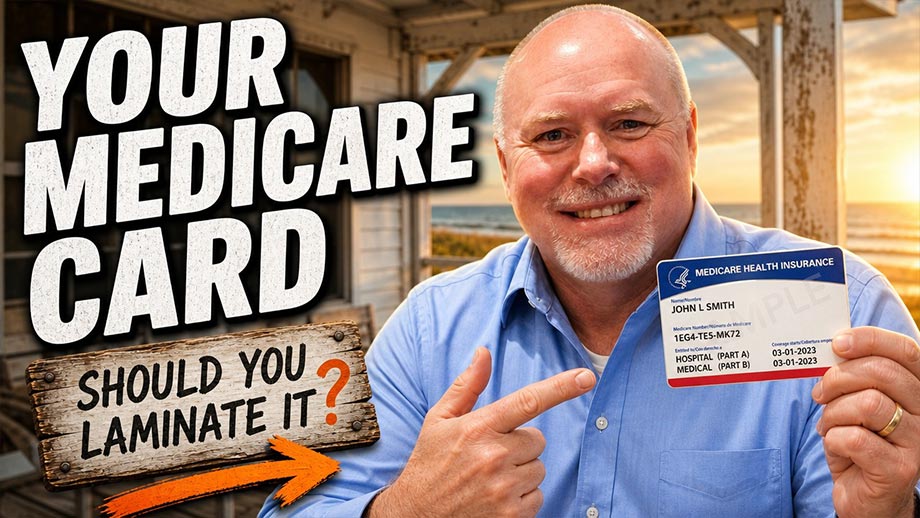
Direct answer: No — while it isn’t technically illegal, both the Social Security Administration and the Centers for Medicare & Medicaid Services (CMS) advise against laminating your Medicare card. Lamination can interfere with security features built into the card and can create scanning or verification problems for healthcare providers and staff. It also permanently locks in your card’s current information, which becomes a real problem if any of your details ever need to be updated. A protective plastic sleeve gives you similar durability benefits without any of these downsides.
Why Do Medicare Cards Need Protection in the First Place?
Medicare cards are made of a paper-based material rather than durable plastic, which makes them genuinely more susceptible to wear, tearing, and moisture damage through regular handling over time. It’s a reasonable concern, and protecting the card from physical degradation matters — the question is really about the right way to do that, not whether protection is worth pursuing.
What Does Official Guidance Actually Say About Lamination?
The Social Security Administration has long advised against laminating Social Security cards specifically because lamination can obscure built-in security features designed to prevent tampering or counterfeiting. CMS extends the same guidance to Medicare cards: lamination can interfere with security elements and can make it harder for healthcare providers to properly scan or verify your card details during check-in.
So while lamination isn’t against the rules in a strict legal sense, it runs against the specific guidance from the agencies that issue and rely on the card, for reasons with real practical consequences — not just an abstract technicality.
What’s a Better Way to Protect My Medicare Card?
A transparent plastic card sleeve or a dedicated card-holder pocket in your wallet gives you meaningful protection against spills, bending, and general wear, without the security or scanning issues lamination introduces. This is the option officially recommended in place of lamination, and it achieves largely the same durability goal.
What If My Medicare Card Gets Damaged, Lost, or Stolen?
Report it right away to limit potential misuse and avoid disruption to your medical services. Contact the Social Security Administration by phone or online, or visit a local Social Security office in person if you prefer face-to-face help.
Protect your personal information throughout this process — only share Medicare details through official channels, and stay alert for scam attempts. Medicare will never call you unprompted demanding personal information or threatening to cancel your benefits; if that happens, hang up and report it directly to Medicare.
How Do I Get a Replacement Medicare Card?
Log into your secure account at Medicare.gov, where you can print a temporary card immediately and order an official replacement to be mailed to you. You can also call 1-800-MEDICARE (1-800-633-4227) to request a replacement by phone. After requesting a new card, keep track of your request — mailed replacements typically take a few weeks to arrive, so following up if it hasn’t shown up within that window is worth doing.
Bring your original card to healthcare appointments to avoid any discrepancy or issue when providers verify your information. For everyday carrying, though, many people choose to keep a photocopy in their wallet and store the original securely at home — this limits your exposure if your wallet is ever lost or stolen, while still giving you quick access to a usable copy when you need it.
A photo on your phone works well too, and for some people it’s more practical than a paper copy. Take a clear photo of both sides of your Medicare card, including your Medicare number and coverage start dates, and keep it somewhere secure on your phone. That way, the information is available whenever you need to reference it or provide it over the phone — at a pharmacy, when scheduling an appointment, or during a call with a provider’s office — even if you’ve deliberately left the physical card at home for safekeeping. This isn’t a replacement for having the physical card at in-person appointments where a provider needs to verify it directly, but it’s a genuinely useful backup for the situations where you just need the number itself.
If your original does go missing, having either a paper photocopy or a phone photo also gives you a helpful stopgap while you request an official replacement.
Bottom Line
Lamination isn’t illegal, but it goes against clear, current guidance from CMS and SSA — and for good practical reasons, not just bureaucratic caution: it can interfere with security features and provider scanning, and it locks you out of easily updating the card if your information changes. A simple plastic sleeve gives you the durability benefit you’re actually after without any of that downside, and keeping a phone photo of your card gives you a handy way to access your number and coverage dates even when you’ve left the physical card safely at home. If your card is ever lost, damaged, or stolen, act quickly — request a replacement through Medicare.gov or by phone, and stay alert for anyone trying to exploit the situation to obtain your personal information.
Key Takeaways
Can I laminate my Medicare card?
It’s not illegal, but CMS and SSA both advise against it, since lamination can interfere with security features and provider scanning, and prevents easy updates if your card information changes.
Why does official guidance discourage laminating Medicare cards?
Because lamination can obscure built-in security features meant to prevent tampering, and can make it harder for healthcare providers to scan or verify the card.
What should I use to protect my Medicare card instead of laminating it?
A transparent plastic card sleeve or a dedicated wallet card slot offers similar protection from wear and moisture without the security or scanning downsides of lamination.
How do I replace a lost or damaged Medicare card?
Log in to your account at Medicare.gov to print a temporary card and order an official replacement, or call 1-800-MEDICARE to request one by phone.
Should I carry my original Medicare card or a photocopy?
Bring your original to healthcare appointments to avoid any verification issues, but consider keeping a photocopy or phone photo for everyday reference and storing the original securely at home.
Can I just keep a photo of my Medicare card on my phone instead of carrying it?
For everyday reference — like providing your number over the phone or at a pharmacy — yes, a photo works well and lets you leave the physical card safely at home. For in-person appointments where a provider needs to verify the physical card directly, bring the original.
By submitting your information, you agree that a licensed insurance agent may contact you by phone or email to answer your questions or provide additional information about Medicare Advantage or Prescription Drug Plans or Medicare Supplement Insurance plans. This is an advertisement for insurance.
Privacy Policy

We do not offer every plan available in your area. Currently we represent six organizations offering thirty products in your area. Please contact Medicare.gov, 1-800-MEDICARE, or your local State Health Insurance Program (SHIP) to get information on all of your options.
Not connected with or endorsed by the United States government or the federal Medicare program.
HEARTWISE, a Senior Health Services affiliate
Copyright © 2026 HEARTWISE, LLC | Privacy Policy