
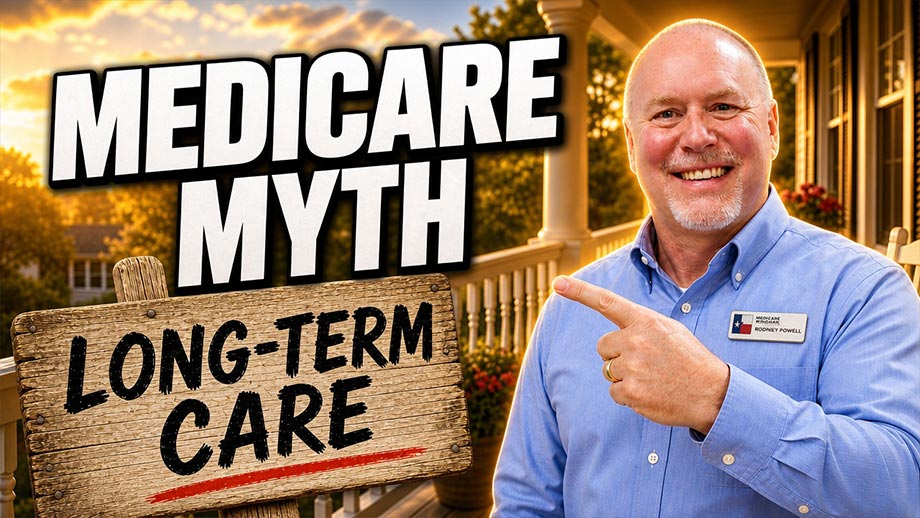
Direct answer: No — this is one of the most consequential and widely believed myths about Medicare. Medicare covers only short-term, medically necessary skilled care under specific conditions, generally capped at 100 days per benefit period. It does not cover long-term custodial care — ongoing help with daily activities like bathing, dressing, and eating — whether that care happens at home, in assisted living, or in a nursing home. If you need that kind of extended help, Medicare simply isn’t the coverage designed to pay for it, and planning for this gap separately is one of the most important pieces of retirement planning many people overlook.
What Is Long-Term Care, Exactly?
Long-term care refers to ongoing help for people who can’t fully care for themselves, needed for months or years rather than a short recovery period. It’s often called custodial care, and it covers help with what are known as Activities of Daily Living:
This isn’t exclusively an older-adult concern — illness, injury, or disability can create a long-term care need at any age. But it’s an especially important planning consideration heading into retirement, since the likelihood of needing this kind of help rises substantially with age.
Part A covers short-term skilled nursing care, not custodial care, and only under specific, fairly strict conditions:
This coverage exists for short-term recovery and rehabilitation — following surgery or a hospital stay, for example — not for ongoing, indefinite custodial support.
Neither Part A nor Part B covers:
This is a genuinely significant gap. The real-world cost of a private nursing home room, or a full-time home health aide, runs into substantial figures annually — often representing one of the largest unplanned expenses a retiree can face if it isn’t addressed ahead of time.
How Do People Actually Plan for Long-Term Care Costs?
A few realistic paths exist, and most people end up combining more than one:
Home care. Home health aides assist with daily tasks like bathing, dressing, and meal preparation while you remain in your own home — often the preferred option for people who want to stay in familiar surroundings as long as possible.
Assisted living. A middle ground between independence and full-time care — residents typically have their own living space with support available as needed, plus meals, activities, and basic medical oversight.
Nursing homes. Round-the-clock care with skilled nursing staff on hand, appropriate for more serious or complex medical needs.
Adult day care. A good option if you need daytime supervision and support but want to remain living at home otherwise — centers typically provide activities, meals, and some health services during the day.
Long-term care insurance. A dedicated way to fund these costs that Medicare won’t cover. The market for this kind of coverage has shifted significantly: standalone, traditional long-term care policies have become far less common, partly because insurers underestimated how long people would live and how much care would actually cost, leading to steep premium increases on existing policyholders over time. In response, most new long-term care coverage sold today is structured as a hybrid policy — combining long-term care benefits with life insurance or an annuity. If you never end up needing long-term care, your beneficiaries generally still receive a death benefit rather than the premiums simply being “lost,” which addresses the biggest historical objection to traditional standalone policies. If long-term care insurance is something you’re considering, it’s worth exploring the current hybrid landscape specifically rather than assuming only the older, traditional model exists.
Earlier than you might think, since the cost and availability of long-term care coverage generally get less favorable as you age. Long-term care insurance, whether hybrid or traditional, is typically more affordable and easier to qualify for when purchased in your fifties or sixties rather than waiting until closer to when you might actually need care. A conversation with a financial advisor about how long-term care planning fits into your broader retirement and estate strategy — savings, investments, insurance, or some combination — is worth having well before it becomes an urgent need.
Bottom Line
The belief that Medicare will cover long-term care is one of the most consequential misunderstandings in retirement planning, precisely because the actual cost of unplanned long-term care can be financially devastating. Medicare’s role here is limited and short-term by design — real planning for extended custodial care requires a separate strategy, whether that’s long-term care insurance (increasingly structured as a hybrid policy today), dedicated savings, or a combination of approaches. Starting this planning while you’re still healthy, rather than after a need arises, is what actually preserves your choices and your financial security.
Key Takeaways
Does Medicare cover nursing home care?
Only short-term skilled nursing care under specific conditions, capped at 100 days per benefit period. It does not cover long-term custodial nursing home stays.
Does Medicare cover assisted living?
No. Assisted living costs are not covered by either Medicare Part A or Part B.
Does Medicare cover home health aides for daily living help?
No, not for ongoing custodial care like bathing, dressing, or meal preparation. Medicare covers only limited, medically necessary skilled home health services under specific conditions.
What is a hybrid long-term care insurance policy?
A policy combining long-term care benefits with life insurance or an annuity, so if you never need long-term care, your beneficiaries still generally receive a death benefit rather than losing the premiums paid.
When should I buy long-term care insurance?
Generally earlier is better — coverage tends to be more affordable and easier to qualify for in your fifties or sixties than if you wait until later in life.
What’s the difference between skilled care and custodial care under Medicare?
Skilled care involves medically necessary treatment or rehabilitation, which Medicare covers short-term under specific conditions. Custodial care involves help with daily living activities, which Medicare doesn’t cover regardless of duration.
By submitting your information, you agree that a licensed insurance agent may contact you by phone or email to answer your questions or provide additional information about Medicare Advantage or Prescription Drug Plans or Medicare Supplement Insurance plans. This is an advertisement for insurance.
Privacy Policy

We do not offer every plan available in your area. Currently we represent six organizations offering thirty products in your area. Please contact Medicare.gov, 1-800-MEDICARE, or your local State Health Insurance Program (SHIP) to get information on all of your options.
Not connected with or endorsed by the United States government or the federal Medicare program.
HEARTWISE, a Senior Health Services affiliate
Copyright © 2026 HEARTWISE, LLC | Privacy Policy