
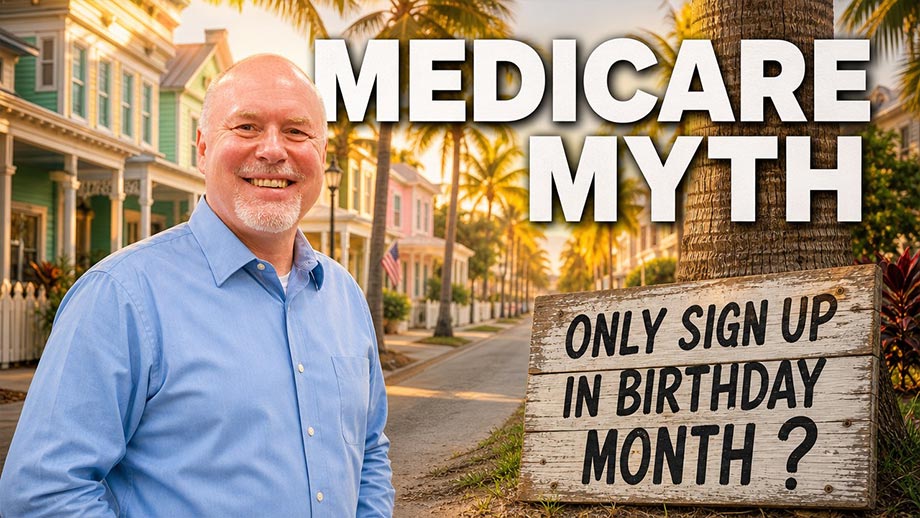
Direct answer: No — this is a common misunderstanding. Medicare has several distinct enrollment windows throughout the year, not just a single birthday-month opportunity. Your Initial Enrollment Period is actually a full seven months centered on your birthday, and additional windows exist afterward — the General Enrollment Period, Special Enrollment Periods, and separate Medicare Advantage and Part D enrollment periods. Understanding all of them, not just the birthday-month piece, is what actually protects you from gaps in coverage or a permanent late enrollment penalty.
What Is the Initial Enrollment Period?
Your Initial Enrollment Period (IEP) is a seven-month window: it starts three months before your 65th birthday month, includes your birthday month itself, and extends three months after. You can sign up for Part A, Part B, or both at any point during this window, and many people also select a Medicare Advantage or Part D plan during this same period.
A timing detail worth knowing: enrolling in the three months before your birthday month generally gets your coverage started on the first day of your birthday month. Enrolling during your birthday month or in the three months after generally means coverage starts the month after you sign up. If you have flexibility, enrolling earlier in your window rather than later gets your coverage active sooner.
If you miss your IEP and don’t qualify for a Special Enrollment Period, the General Enrollment Period (GEP) is your fallback — an annual window each winter open to anyone who missed their original opportunity. Coverage obtained through the GEP generally begins the first day of the month after you enroll.
One nuance worth clarifying: the GEP itself is specifically for enrolling in Part A and/or Part B. If you also want a Medicare Advantage or Part D plan around the same time, that’s handled through a separate, related enrollment window that typically runs alongside your GEP enrollment — not literally the same mechanism, but close enough in timing that most people coordinate both steps together. Working with someone familiar with this sequencing helps avoid a gap between enrolling in Part A/B and getting your Medicare Advantage or Part D coverage active.
Both penalties are genuinely permanent, not one-time fees — which is exactly why understanding your specific enrollment window matters more than assuming you can catch up later without consequence.
What Are Special Enrollment Periods, and How Long Do They Last?
Special Enrollment Periods (SEPs) let you enroll or make changes outside the standard windows when specific qualifying events occur — most commonly losing employer-based health coverage, but also situations like a declared natural disaster or relocating to a new area.
The duration genuinely varies by the specific triggering event — don’t assume a single universal timeframe applies. For the most common SEP, tied to losing active employer group health coverage, you generally have a considerably longer window than many other SEP types — commonly around eight months from when that coverage or the related employment ends. Other, more narrowly defined SEPs can carry much shorter windows. Because the exact rules depend heavily on your specific situation, confirming your SEP type and its actual deadline directly, rather than assuming a generic timeframe, is essential — acting too late on a shorter SEP based on an incorrect assumption about timing is a real and avoidable risk.
Bottom Line
The birthday-month myth undersells just how much flexibility Medicare’s enrollment structure actually offers — a full seven-month Initial Enrollment Period, an annual General Enrollment Period fallback, and Special Enrollment Periods for genuine life changes. The real risk isn’t a narrow enrollment window; it’s not knowing which window applies to your specific situation and its actual deadline. Starting to learn about Medicare before you need it, and reviewing your coverage annually as your needs evolve, gives you the time to make these decisions well rather than rushed. An independent Medicare broker can help confirm exactly which enrollment window applies to you and what deadline you’re working with.
Key Takeaways
Can I only enroll in Medicare during my birthday month?
No. Your Initial Enrollment Period spans seven months — three months before your birthday month, your birthday month, and three months after.
What happens if I miss my Initial Enrollment Period?
You can use the General Enrollment Period, an annual fallback window, though you may face a late enrollment penalty depending on your situation.
How long do Medicare late enrollment penalties last?
Both the Part B and Part D penalties are generally permanent — they last for as long as you maintain that specific coverage, not just temporarily.
How long does a Special Enrollment Period last?
It depends on the specific qualifying event. The most common SEP, triggered by losing employer coverage, typically offers a considerably longer window than some other, more narrowly defined SEP types.
When does coverage start if I enroll during the General Enrollment Period?
Generally the first day of the month following your enrollment.
Can I enroll in a Medicare Advantage plan during the General Enrollment Period?
Not through the GEP directly, but a separate, related enrollment window typically runs alongside it for people enrolling in Part A/B through the GEP, allowing you to also select a Medicare Advantage or Part D plan around the same time.

By submitting your information, you agree that a licensed insurance agent may contact you by phone or email to answer your questions or provide additional information about Medicare Advantage or Prescription Drug Plans or Medicare Supplement Insurance plans. This is an advertisement for insurance.
Privacy Policy

We do not offer every plan available in your area. Currently we represent six organizations offering thirty products in your area. Please contact Medicare.gov, 1-800-MEDICARE, or your local State Health Insurance Program (SHIP) to get information on all of your options.
Not connected with or endorsed by the United States government or the federal Medicare program.
HEARTWISE, a Senior Health Services affiliate
Copyright © 2026 HEARTWISE, LLC | Privacy Policy